
Trigger points
Dry Needling Zurich: Targeted Needle Therapy for Stubborn Trigger Points
Chronic neck tension, recurring tension headaches, or a tennis elbow that doesn't respond to traditional treatments? Dry needling in Zurich at Physio Waidfuss in Wipkingen is one of our most effective methods for specifically releasing such persistent myofascial trigger points. With fine acupuncture needles, we reach muscle structures that are often difficult to treat with hands alone.
Dry needling
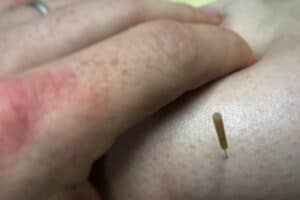
Dry needling
What is dry needling?
Dry needling is a physical therapy needling technique in which a thin, sterile needle is inserted directly into a trigger point – a small, overstimulated knot in the muscle responsible for local and often radiating pain. Unlike manual techniques that rely on palpation and pressure with the hands, the needle reaches the trigger point directly and precisely, even in deeper muscles.
The method has become increasingly established scientifically in recent years: Newer research on myofascial trigger points (MTrPs), such as Gerwin's ion channel dysfunction model, today provides a well-founded explanation for why trigger points form and how dry needling specifically addresses them. Professionals such as Reto Zillig, head of Dry Needling Academy Lucerne, emphasize that the method has since grown far beyond a niche technique.
What does a treatment with us involve?
- Medical History & Findings We record your complaints and, through targeted palpation, identify the affected muscles and the relevant trigger points.
- Needle application The fine needle is inserted directly into the trigger point. The insertion itself is usually barely noticeable.
- Muscle Twitch & Relaxation When the needle hits the trigger point, there is often a brief, involuntary muscle twitch – a good sign that the overstimulated spot has been reached and can release.
- Functional Training & Stretching: Subsequently, we will add targeted exercises and stretches to long-term stabilize the relaxed muscles instead of them tensing up again.
What conditions is this method suitable for?
This needle therapy is particularly suitable for:
✔ Chronic muscle tension (e.g., neck, back, shoulders)
Tension headaches and migraines
Tendon irritations such as tennis elbow or runner's knee
Pain due to poor posture and muscular imbalances
✔ Sports injuries and overuse syndromes
Kieferverspannungen im Zusammenhang mit CMD/Temporomandibular Joint Therapy
When is this method not suitable?
Like any needle therapy, this method also has its limitations. We do not use it or only use it after consultation in cases of:
❌ Taking blood thinners
❌ Recently operated areas
✖️ Pregnancy (only after consulting with your doctor)
❌ Known allergies to nickel or latex
In case of doubt, we will discuss it directly with you during the initial examination so that the treatment can continue safely.
Dry needling, IMTT®, or acupuncture – what's the difference?
A question that we are frequently asked: All three methods target trigger points, but differ in their approach. Our Manual Trigger-Point-Therapy IMTT® works purely with the hands, using targeted pressure and palpation. Our needle therapy, on the other hand, uses fine needles to directly treat trigger points that are deeper or harder to reach. Acupuncture, in turn, is based on traditional Chinese medicine and follows energetic meridians, while our method is scientifically sound and purely Western-medical, focusing exclusively on muscle and trigger point structures. We often combine all approaches depending on the findings to achieve the best possible effect.
Ready to target your tensions?
If traditional massages or stretching no longer suffice for you, Dry Needling in Zurich could be the targeted addition you are missing. Book an appointment with Physio Waidfuss in Wipkingen now and let us work together to determine if this method is suitable for your specific concerns.
 Posted on Google
 DGFebruary 11, 2023
 Because my shoulder hurt, I went to an orthopedist some time ago. He diagnosed an impingement (shoulder impingement syndrome). His recommendation: there wasn't much that could be done; I should simply omit overhead movements during weight training. I was dissatisfied, but I relied on the medical judgment. However, as the pain increased, my father recommended consulting Physiotherapie Waidfuss. There, the focus wasn't on the diagnosis, but on the causes of the problem. Pragmatically and efficiently, work was done using dry needling on the shoulder, back, and arm muscles. In addition, I was shown exercises that I had to perform daily. After just a few weeks, the pain subsided and I was able to start weight training again. I was thrilled at how quickly an improvement occurred despite the condition having become chronic. Now, after six months of therapy and diligently performing the exercises, the pain is gone. A large piece of my joy in life has been given back to me. Many thanks to the team at Physiotherapie Waidfuss!
Are there side effects to dry needling?
Dry needling is considered a very safe procedure. Potential, mostly harmless, and temporary side effects include mild muscle soreness, brief tenderness at the insertion site, or a small bruise. These usually resolve on their own within one to two days. Serious side effects are very rare when properly applied by trained therapists.
What are the experiences of other patients with dry needling?
Many of our patients report a noticeable loosening of the treated muscles and a significant reduction in pain after just the first few sessions. The injection itself is usually perceived only briefly as a slight pressure or a brief tug, followed by a feeling of relaxation in the muscle. As with any therapy, individual experiences vary – we would be happy to discuss your personal situation in an initial consultation.
FAQ Dry Needling
Dry needling is a technique in which fine needles are inserted into specific trigger points within the affected muscles. These trigger points are often hardened or tense muscle areas that can cause pain.
Although both techniques use needles, they differ fundamentally in their approach and philosophy. Dry needling is based on Western medical science and focuses on trigger points and muscle tissue, while acupuncture is part of traditional Chinese medicine and stimulates energetic meridians.
Dry needling is often used for the treatment of:
- Muscular trigger points
- Myofascial pain syndromes
- Chronic pain
- Spasticity in neurological patients
- Acute and chronic orthopaedic complaints
The potential benefits of dry needling include
- Pain reduction
- Improving the range of motion
- Reduction of muscle tension
- Acceleration of the healing process for injuries
The therapist carries out a comprehensive assessment and identifies the trigger points to be treated. The needles are then inserted directly into these trigger points. This is often followed by gentle manipulation of the needle to maximize the therapeutic effect.
Some patients experience slight discomfort or muscle twitching when the needle reaches a trigger point. However, most do not feel any significant pain and the discomfort usually subsides quickly.
The most common side effects are
- Temporary pain or tenderness at the injection site
- Slight bleeding or bruising
- Tiredness or general malaise after treatment
Yes, if it is performed by a suitably trained and qualified therapist. Our therapists are specially trained in this technique and use sterile needles to minimize the risk of infection.
Dry needling should be avoided or used with caution under the following conditions:
- Acute infections or skin diseases at the injection site
- Blood clotting disorders or use of anticoagulants
- Severe cardiovascular diseases
- Pregnancy (especially in the first trimester)
- Sensitive or anxious patients who may react strongly to the treatment
Anticoagulants are no longer an absolute contraindication. However, aggravating risk factors must be taken into account:
- Recently initiated medication
- Volatile INR (International Normalized Ratio)
- Intensive sporting activity
- Interdependence with other medications Recommended measures to minimize risk include
- the use of acupuncture needles instead of sharpened injection needles and the postneedling compression for 15 seconds.
After the treatment you should:
- Drink plenty of water to promote healing.
- Avoid excessive strain on the treated muscle groups.
- Watch out for unusual symptoms such as severe pain or swelling and contact your therapist if necessary.
The number of treatments required varies depending on the type and severity of the symptoms. Some patients experience an improvement after just a few sessions, while others require several treatments over weeks or months.
Please contact our practice by telephone or via our website to make an appointment. Our team will be happy to answer any further questions you may have and to make an appointment.