

Discover the latest trends in dry needling
Discover the revolution in pain treatment: Dry needling
Imagine you could finally relieve chronic pain sustainably - and in no time at all. Dry needling, an advanced, effective treatment method, offers exactly this possibility. The science behind this fascinating technique has undergone groundbreaking developments in recent years, proving that dry needling is far more than just a short-term trend. Have we piqued your interest? Then let's delve deeper into the world of dry needling and discover how it can change your life.
Typical symptoms in which Dry Needling helps
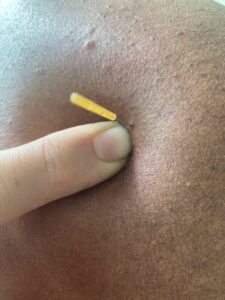
Dry needling is primarily used for symptoms that are caused by active Trigger points are caused by: pulling or radiating muscle pain, palpable tension knots, limited mobility, and muscular stiffness that does not adequately respond to traditional stretching or massage.
This article provides you with a comprehensive overview of the mechanism of action and current research on Dry Needling. If you want to know how a Dry Needling treatment works in practice at our clinic in Zürich Wipkingen and would like to schedule an appointment, you can find all the details in our post. Dry Needling in Zürich Wipkingen.
Current developments and research results
Dry needling has proven to be an important therapy in the last few years. Physiotherapy and pain treatment. This alternative form of therapy, which uses thin needles to treat specific myofascial trigger points is attracting increasing attention in the scientific community and has recently received significant recognition.
Experience with dry needling
 Posted on Google
 DGFebruary 11, 2023
 Because my shoulder hurt, I went to an orthopedist some time ago. He diagnosed an impingement (shoulder impingement syndrome). His recommendation: there wasn't much that could be done; I should simply omit overhead movements during weight training. I was dissatisfied, but I relied on the medical judgment. However, as the pain increased, my father recommended consulting Physiotherapie Waidfuss. There, the focus wasn't on the diagnosis, but on the causes of the problem. Pragmatically and efficiently, work was done using dry needling on the shoulder, back, and arm muscles. In addition, I was shown exercises that I had to perform daily. After just a few weeks, the pain subsided and I was able to start weight training again. I was thrilled at how quickly an improvement occurred despite the condition having become chronic. Now, after six months of therapy and diligently performing the exercises, the pain is gone. A large piece of my joy in life has been given back to me. Many thanks to the team at Physiotherapie Waidfuss!
Research results and their significance
Dry needling, which used to be regarded as a niche technique, has now found its way into renowned specialist journals. New research findings focus on the complaints evoked by trigger points, their causes and a wide range of treatment options. Reto Zillig, physiotherapist and head of the DryNeedling Academy Lucerne, emphasizes that this therapy method is finally receiving the recognition it deserves as a "game changer" in modern pain treatment.
Increasing research on myofascial trigger points (MTrPs) has contributed to the further development and accuracy of the technique. The newly formulated ion channel dysfunction model by Gerwin (2023) expands the basic understanding of the activation mechanisms of MTrPs and provides a sound explanation for their causes of dysfunction.
Categories
- Osteoarthritis
- Leg
- Extensions
- Dry needling
- Elbow
- Foot
- Balance
- Hand
- Hip
- ISG
- Pine
- Knee
- Headache
- Strengthening
- Lymphatic drainage
- Mobilization
- Muscle pain
- Myofascial therapy
- Neck pain
- OP
- Physiotherapy Höngg
- Physiotherapy Wipkingen
- Physiotherapy Zurich
- Rehabilitation
- Back pain
- Shoulder and neck
- Shoulder arm
- Shoulder pain
- Pregnancy
- Dizziness
- Sports
- Trigger points
- Exercises
- Lower leg
- Injury prevention
- Wade
- What to do?
- Wound healing
Difference between dry needling and manual techniques
While manual techniques, such as trigger point therapy IMTT®, are palpative in nature and rely on the targeted palpation of muscle and bone structures, dry needling uses thin acupuncture needles to stimulate trigger points directly. This method enables precise and deeper treatment of myofascial painespecially if manual techniques are not sufficient.
A recent bibliometric analysis (2000-2022) shows that research on dry needling has gained momentum. With 458 published works, 112 of which are from the USA, and the Universidad Rey Carlos in Madrid as the leading institution in this field, it stands out as a clear leader in scientific research. Moreover, renowned authorities such as César Fernandez-de-las-Penas and David G. Simons are instrumental in this development.
Therapist qualification and patient-oriented approach
Our practice places great emphasis on the professional training and extensive experience of our team. We strive to provide you with effective and lasting pain relief through the use of Dry Needling. Our patient-centric approach ensures you receive a personalized therapy that is both professional and caring.
Self-help: What you can do yourself after the treatment
-
Drink plenty of water after the treatment, as this helps to remove the dissolved tension.
-
Move the treated muscle gently on the same day, rather than completely resting it.
-
Mild muscle soreness is normal – heat (e.g., a heating pad) can alleviate the discomfort afterwards.
-
On the day of treatment, avoid intense sports or sauna.
When is Dry Needling not suitable – when to see a doctor?
Dry needling is not suitable for everyone. Please speak with your doctor, your doctor of choice, or our team beforehand if you have a blood clotting disorder, are pregnant, have a severe needle phobia, or the affected area is acutely inflamed or injured.
Conclusion
The evidence clearly speaks in favor of the use of needles in modern Physiotherapy. New research models and clinical studies further reinforce the importance of this form of therapy. If you suffer from myofascial pain, Dry Needling could be a valuable addition to your treatment. Trust in our expertise and Book an appointment online now, So that we can jointly alleviate your complaints.
Also read: Dry Needling Side Effects: What is normal and when should you be careful
Fascia therapy - tasks and influence on pain
Often the connective tissue is to blame - in short,...
more information
Achilles pain? These methods really help
Achilles tendon pain Achilles tendon pain:...
more information
Flossing for scar treatment: Innovative, effective and supportive
Physiotherapie Waidfuss in Zurich are your experts Have...
more information
Headaches - What to do? Causes and solutions
Who is affected by headaches? A headache is...
more information