


Pain in the back
Characteristic symptoms of lumbago
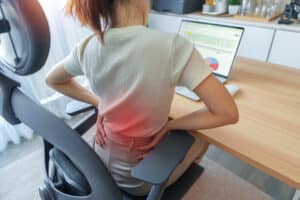
The pain is often localized in the lower back, but can also radiate into the groin, thighs, or lumbar region. All movements of the lumbar spine are painful or restricted. The pain can be deep, pulling, or stabbing, and the affected region often feels cramped and warm. Symptoms such as sciatica pain that radiates down the legs are also possible.
Seek immediate medical attention or go to the emergency room if you experience numbness in the genital or anal area, problems urinating or defecating, tingling or weakness in both legs, or if the pain begins after a serious accident. You should also see a doctor immediately if you experience fever or illness, suddenly very severe or rapidly increasing pain, unwanted weight loss, or pain that does not improve at night. These warning signs correspond to the information provided by the British NHS (As of 2026).
Treatment approaches
Self-help for acute Back pain
Stay as active as your pain allows and avoid prolonged bed rest. A Cochrane review (Dahm et al., 2010, 10 studies with 1,923 participants) found a small advantage for the advice to «stay active» over bed rest in acute lower back pain without sciatica; there was little difference in pain and function. In sciatica, there was little difference. However, the studies behind them are older. Exercise promotes blood circulation and helps to gently mobilize the vertebrae. Change positions frequently (lying, sitting, and standing) without exceeding the pain threshold. Heat applications, such as heat packs, warm baths, or ointments, can be relaxing and promote blood circulation. Heat can help in the short term: A Cochrane review (French et al., 2006, 9 studies involving 1,117 people) found small, short-term relief from heat packs for acute and subacute pain. However, the study design is limited. In severe back pain, anti-inflammatory painkillers or topical ointments may be helpful, but their use should be monitored by a physician.
Physiotherapy as an effective measure against lower back pain
Physiotherapy treatment is crucial to support the healing process and prevent future back pain. Physiotherapy can include:
Exercises to alleviate pain and relieve the lower back: These help to mobilize the affected areas.
Stretching and mobilization exercises: Promotion of mobility and reduction of pain through Piriformes syndrome or sciatic nerve pain. Treatment of the Trigger points.
Back training and postural gymnastics: Teaching correct postures and movement patterns for everyday life.
Advice on lifting loads: Tips and techniques to protect the back, especially the lumbar spine, e.g. when lifting heavy loads from the floor.
Strength training for the back and core: Building up a stable musculature to prevent further complaints.
These measures provide relief and at the same time promote long-term back health.
When should you see a doctor: Medical evaluation for persistent sciatica nerve pain
If the complaints do not subside after four to seven days or even worsen, a specialized medical examination is advisable. The doctor can determine the exact cause of the pain through targeted diagnostics, such as imaging procedures, and initiate appropriate treatment. Imaging is usually not necessary in the case of a common herniated disc; guidelines recommend against routine X-rays or MRI (Hartvigsen et al., 2018).
Prevention: How to protect yourself from further back pain
Preventive measures are essential to prevent recurring back pain. Here are some tips that you should incorporate into your daily routine:

Regular exercise: An active lifestyle is important. Even short walks can help.
Ergonomics at the workplace: Ensure that your furniture is back-friendly and that your posture is correct.
Training for the torso: Targeted exercises strengthen the back muscles and improve posture.
Correct lifting: Heavy loads should be lifted from the legs, keeping the knees bent and the back straight. This protects against lumbago and complaints caused by piriformis syndrome in particular.
In the acute phase of a stroke, many affected people find help in a Physical treatment, To release the protective tension in the muscles.
Through these preventive measures and appropriate treatment for acute symptoms, you can keep your back healthy and pain-free. Stay active and listen to the signals your body sends. professional physiotherapeutic Support can help you promote your back health in the long term and prevent future back pain. If the symptoms also radiate into the leg, also read our article on Lumbago and sciatica in Zurich. You can here Book an appointment.

Trapped nerve: Symptoms, duration, and what really helps
Stinging, burning or tingling? What lies behind a pinched nerve, how long it takes and what really affects you...
Read more
Symphysis pain during pregnancy: What really helps?
Symphysis pain during pregnancy affects many women unexpectedly: a stabbing pain in the front of the thigh…
Read more
Spinal canal stenosis: When walking suddenly becomes a torture
What is a spinal canal stenosis? It is a gradual process that severely restricts everyday life: they make you…
Read more
Back pain during pregnancy in Zurich | Physio Waidfuss
Back pain during pregnancy: This is how physiotherapy in Wipkingen can help you…
Read more
Back pain due to sports Zurich | Physio Waidfuss
Back pain from sports: When training instead of balance brings stress to the back Zürich: They…
Read more
The SI Joint Syndrome: Is it the disc or the pelvis?
SI joint syndrome The pain is extremely deep, almost in the buttocks, often radiates unilaterally into the thigh and is...
Read more
Acute lumbago sciatica Zurich – We treat you in Wipkingen
Back spasm and sciatica: When your back suddenly locks Up. A wrong step while getting out of the trampoline,...
Read more
Back Pain in Old Age Zurich | Physio Waidfuss Wipkingen
Back pain in old age: Why it's not "normal aging" "It's just from aging" – we hear this sentence...
Read more
Diagnosis of herniated disc (disc hernia)
Diagnosis of herniated disc (disc herniation): What helps without surgery? For many patients, this is the moment when…
Read more
Lumbago or lumbago (witch's shot)? What is the difference?
Lumbago (Latin for «cross pain», colloquially also known as "hexenschuss") refers to sudden, often stabbing pain that occurs…
Read more
Put an end to office back pain in Zurich Wipkingen
Put an end to office back pain Do you know what it's like? A long working day, lots of screen time - your neck gets...
Read more
Stretching program
Your stretching program Stretching is an essential foundation for your mobility and well-being.
Read more
Workplace ergonomics - Do you work at a computer?
Ergonomics at the workplace: effective measures against back pain and neck tension You’re probably familiar with…
Read more
Back pain: understanding and solutions
Back pain: can have many causes Back pain is one of the most common complaints that affect people....
Read more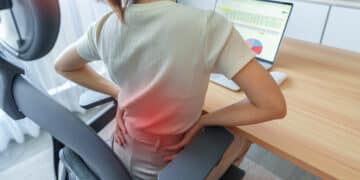
Lumbago - What really helps to relieve the pain
Lumbago - Understanding lower back pain: Important information for you Imagine you are lifting...
Read more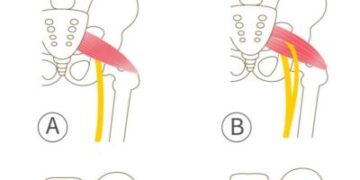
Piriformis syndrome - What helps against pain in the buttocks?
Piriformis syndrome and lumbago at a glance What is piriformis syndrome? Piriformis syndrome is a...
Read more
Back pain - causes, symptoms and treatment options
Back pain - causes, symptoms and treatment options Back pain is a widespread problem.
Read more