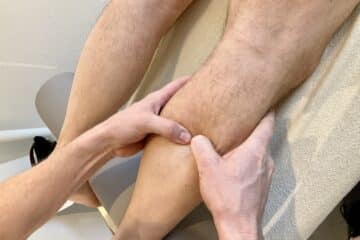
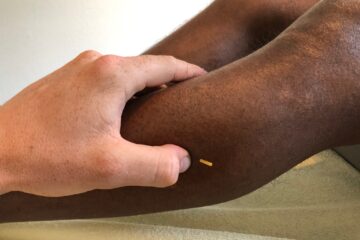
- Blood circulationWhile the band is in place, the blood flow is briefly reduced; after that, the blood flows again. Whether this speeds up healing has not yet been proven.
- Pain reliefSome people feel less pain immediately after applying the product.
More mobilityStudies show that flossing can improve mobility in the short term.
- Improving body awarenessThe technique creates stimuli that help you to better perceive and control your posture and movements.
- Cleaning the tissueFlossing promotes the removal of waste products and ensures a healthy healing environment.
Typical symptoms of scar adhesions
Signs of problematic scar tissue include a pulling sensation, limited mobility around the scar, hardening of the skin, and occasional sensitivity to pressure.
When is this therapy useful?
Flossing can be helpful in many situations:
- In fresh scars, once the wound is closed, to maintain the mobility of the scar.
- In the case of older scars, to improve mobility and promote the tissue's ability to stretch.
- For support with muscle hardening and sports injuries.
Caution is advised
As many advantages as flossing offers, there are also situations in which this method should not be used. These include blood clotting disorders, open wounds or certain skin conditions. Always speak to a specialist before trying new therapies.
Your experts at Physio Waidfuss in Zurich
At Physio Waidfuss, we are here to support you with our expertise and caring service. Our team of experienced and qualified physiotherapists uses proven techniques to provide you with the best possible treatment. With our patient-oriented approach, we ensure that flossing is used safely and effectively.
Conclusion
Flossing is a promising technique for treating scars and promoting the healing processes of the musculoskeletal system. Thanks to the support of our team at Physio Waidfuss, you can be sure that you are in the best hands.
Flossing and scar treatment: What the studies show
- More mobile in the short term: A meta-analysis from 2026 found that flossing can directly improve the mobility of a joint, but has no clear effect on strength, jumping, or sprinting. The evidence is of medium quality (Yao 2026).
- Open in the long term: Another review from 2026 concludes that small studies and short observation periods do not yet allow for reliable statements about the effect in rehabilitation (Chang 2026).
- Scars: There have been few studies specifically on flossing scars so far. Better studied is scar massage: In burn scars, it reduced pain, itching, and scar thickness (Lin 2023).
- Our conclusion: Flossing can complement the treatment of scars, especially to improve mobility. The basics remain massage, exercise, and your exercises at home.
Self-help: What you can do for your scar yourself
-
Massage one healed Scrape (after approval by a doctor/physiotherapist) gently daily with a fragrance-free cream to keep the tissue supple.
-
Regularly move the adjacent joints in a painless area to prevent scarring.
-
Protect fresh scars from direct sunlight.
When should you see a doctor or go to physical therapy?
Have the scar evaluated by a physician or physical therapist if it is red, overheated, or painful, if it has hardened or become swollen, or if the mobility of the adjacent joint remains noticeably restricted.
We specifically use flossing within our company as part of manuel therapy one.
Sources