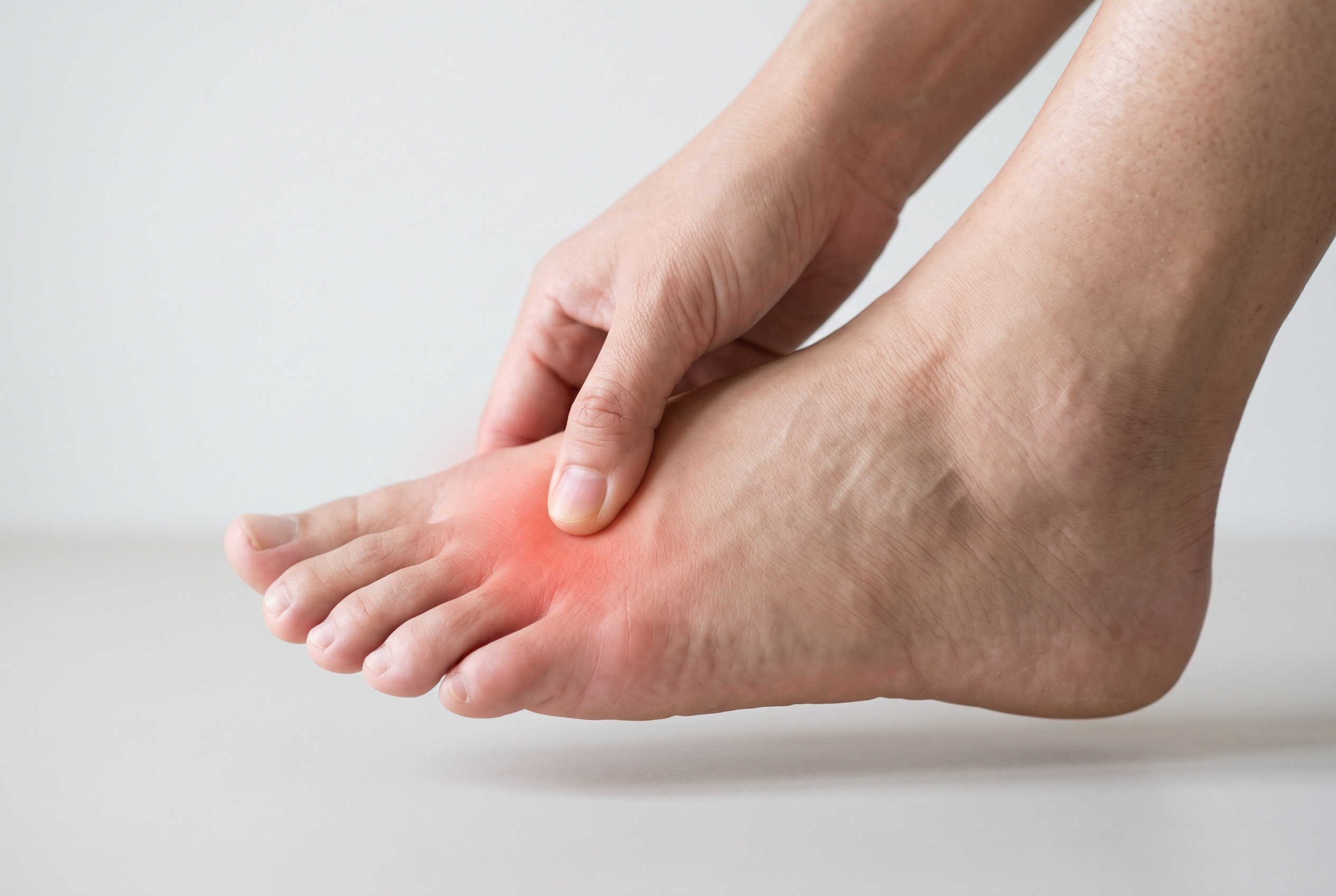
What is a Morton neuroma?
Small nerves run from the midfoot bones to the toes. If one of these nerves is permanently compressed or irritated, the nerve tissue thickens. This is called a Morton’s neuroma, also known as Morton’s neuralgia. Most commonly, the nerve is affected between the third and fourth toes. This is not a tumor in the usual sense, but a painful thickening caused by chronic pressure.
Typical symptoms
- Burning or stabbing pain in the forefoot, often when walking or running
- Feeling like you’re standing on a pebble or a fold
- Numbness or tingling in the adjacent toes, usually the third and fourth toes
- Complaints become worse in tight or high-heeled shoes
- Improvement after removing the shoes and when massaging the foot
Causes and risk factors
Most often, several factors come together: tight, pointed shoes, high heels, a flattened arch (pronation), frequent running or jumping, and improper loading. Women are significantly more affected than men. Also, a shortened calf muscle increases pressure on the forefoot. Read more about heel and foot problems here. Hip pain.
How is the diagnosis made?
The examination begins with your history and the physical examination findings. Typical pain is associated with lateral compression of the metatarsus, sometimes with a noticeable clicking sensation. If necessary, doctors will perform ultrasound or MRI to rule out other causes, such as irritation of the metatarsal joint or a stress fracture (Middle-foot bone).
What you can do yourself
- Change of shoes: Wide toe box, flat heel, plenty of space in the forefoot.
- Adjusting the load: Temporarily reduce running and jumping until the irritation subsides.
- Foot massage: Gentle rubbing and stretching of the toes can relieve the pressure.
- Deposits: Support behind the front football is a way to relieve pressure on the nerve. Get appropriate advice.
How does physiotherapy help?
We assess how your foot is loaded: gait pattern, arch of the foot, flexibility of the toes and ankle joints, and the calf muscles. After that, we treat them specifically with manual therapy, Mobilization of the forefoot, stretching of the calf and strengthening of the small foot muscles. We will also discuss shoes and daily and sports activities with you.
The evidence for non-surgical treatments is limited: A meta-analysis of 25 studies found less pain with mobilization and manipulation of the plantar fascia than without treatment; however, a standard treatment with high-quality evidence has not yet been available (Matthews et al., 2019).
If the symptoms do not improve after a few weeks, we will discuss with your doctor further steps such as infiltration or surgery. These decisions are made by the doctors. For infiltrations, a review of six randomized studies and six observational studies (1438 patients) shows that cortisone, capsaicin and other substances can reduce pain without serious side effects (Millán-Silva et al., 2024).
When to see a doctor?
Have the complaints investigated if they persist for longer than a few weeks or worsen. You should have them evaluated by a doctor immediately:
- Redness, swelling and overheating of the foot, especially with fever
- Complaints after a fall or accident
- Increasing numbness or weakness in the toes
- Persistent pain at night
According to a study, the benefits and risks of individual treatments are as follows: Cochrane review So far, it has only been sparsely covered. A joint decision with your doctor is therefore important.
Frequently asked questions
Will a Morton neuroma go away on its own?
The nerve tissue usually does not regrow on its own. However, the symptoms can often be significantly relieved when the pressure on the nerve decreases.
Which shoes are suitable?
Shoes with a wide toe box, flat heel and soft cushioning. The forefoot must not be pinched.
May I continue to exercise?
Most of the time, yes, in a modified form. Instead of running, cycling or swimming are often well-tolerated. We discuss with you what is suitable for you.
Date in Zürich Wipkingen and Höngg
Do you have pain in your forefoot? We will thoroughly examine your foot and create a plan that fits your daily routine. Book appointment online or by phone at 044 585 99 49.
This article does not replace medical advice.