
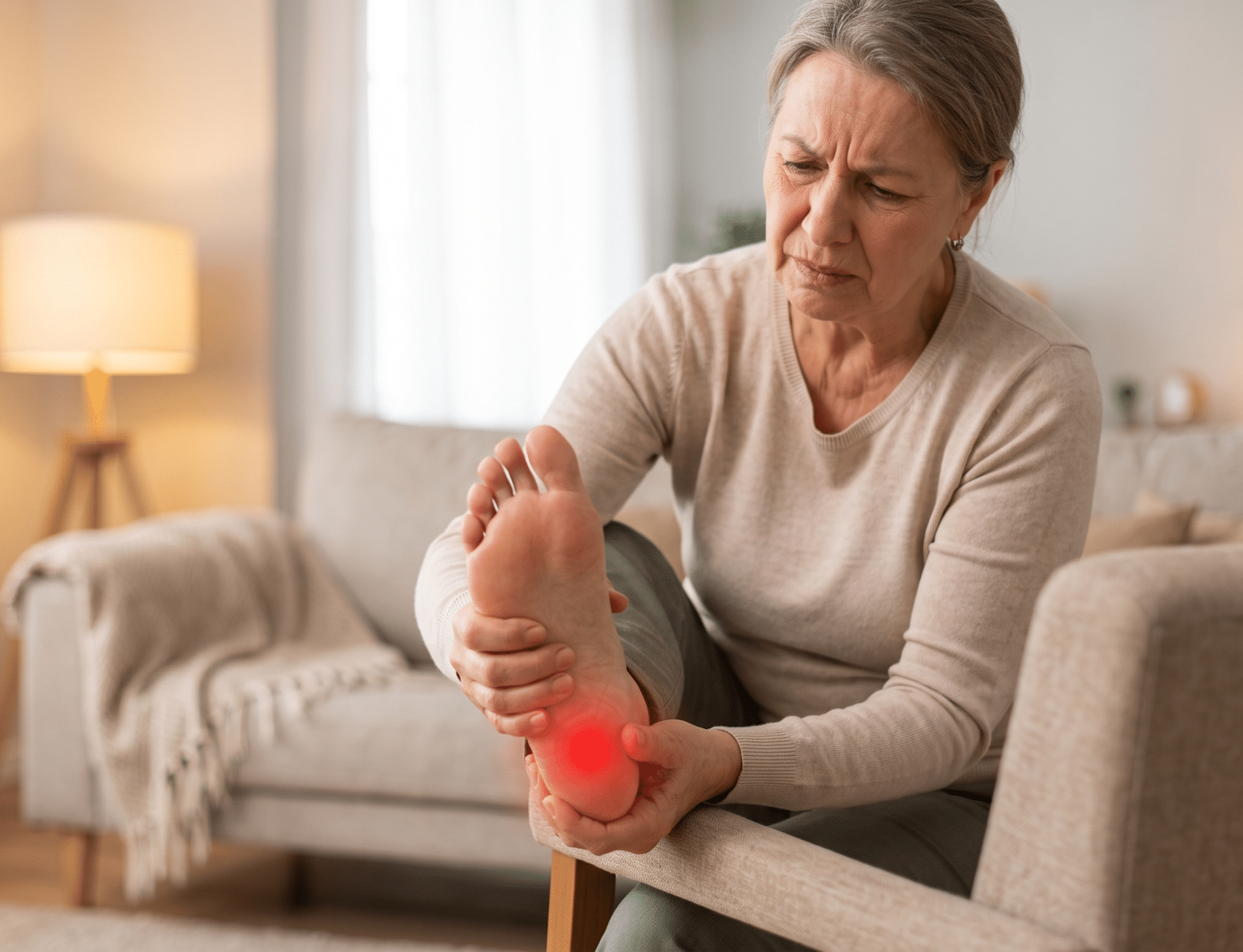
Heel spur treatment
The Myth of the Bony Spur
Patients are often concerned when a so-called heel spur—a small, bony outgrowth on the heel—is discovered on an X-ray. Many believe that only permanent orthopedic insoles or even surgery can help now.
However, the medical reality is different: The bony spur itself usually doesn’t cause any pain at all. The actual trigger for the pain is usually an overloaded and inflamed tendon plate under the sole of the foot, the so-called plantar fascia. Specialists refer to this as a Plantar fasciitis.
Everything is connected: A holistic view of pain
In the Physiotherapy Wipkingen let's never consider complaints in isolation. Just as a persistent tension in the Shoulders or in Neck Often caused by weak trunk muscles or a one-sided sitting position at the desk, the foot is also only a part of a complex system.
Frequently arise Heel pain through imbalances further up the kinetic chain. This can be altered pelvic posture, restricted hip mobility, or muscular imbalances in the core. Our approach is therefore always to address the The body as a whole to analyze and not limit ourselves solely to the local area of pain in the lower extremities.
Modern Therapy: Managing Load, Healing Tissue
A successful Heel spur treatment requires some patience and the right strategy. Simple restraint is rarely effective. Rather, it is about intelligent load management and targeted strengthening of the affected structures.
In doing so, an important principle applies: If we specifically target musculature strengthen, we also usually stabilize surrounding joints. This means that a strong foot not only relieves pressure on the heel, but also protects the ankle and knee from excessive strain.
To stimulate healing and relieve tension throughout the body, we rely on proven methods:
-
Manual Fascial Therapy To resolve adhesions in the tissue – whether in the sole of the foot, the calf or the radiating fascial chains of the back.
-
Neuro-centric Training (Neuroathletics): Movement originates in the brain. Through targeted, neurocentric impulses, we help the nervous system reclassify affected body regions as "safe." This often leads to significant pain reduction and more precise muscular control throughout the body.
-
Local voltage regulation: For deep-seated muscle tightening, evidence-based methods can be used in consultation with you, such as Dry needling or trigger point therapy can be used. These techniques serve as a purely objective, optional supplement to specifically normalize the tension state in the tissue.
Self-help: Effective plantar fasciitis exercises for everyday life
You can actively support the healing process yourself. Here is a short checklist with simple Plantar fasciitis exercises, that can be easily integrated into everyday life:
-
Calf stretch: Stand with your back to a wall, with the painful leg extended behind you. Keep your heel on the floor. Lean forward until you feel a stretch in your calf (hold for 3 sets of 30 seconds).
-
An arched foot strengthens: Place a small towel on the floor and try to pull it towards you while sitting, using only your toes. This also benefits your ankles.
-
Fascia massage Roll the sole of the foot in a sitting position with gentle pressure over a small massage ball (e.g., hedgehog ball or tennis ball) to promote local blood circulation.
Note: Always start these exercises gently and increase the intensity only as pain allows.
When should you have a medical or physical therapy consultation?
Have the heel examined promptly if the pain occurs at night or at rest, starts very suddenly, is accompanied by redness and swelling, or does not improve despite consistent self-care for several weeks.
Your Path to Pain-Free Movement
Heel pain can be persistent, but it’s very manageable with the right strategy. If you can no longer get out of bed in the morning without discomfort, we’re here to help.
The practice team Physiotherapy Waidfuss invites patients from the Zurich region to contact us with questions or for an individual assessment. Whether you need support from Physiotherapy Höngg or the Physiotherapy Wipkingen searching – Arrange an appointment online – together we will find the way back to a pain-free and active everyday life!

Fractured midfoot bone: symptoms, healing and physiotherapy
How to recognize a midfoot fracture, how long the healing process takes, and how physiotherapy affects walking and endurance…
Read more
Ankle fracture: healing, load bearing and physiotherapy
How to heal a broken ankle, when you can resume activities and how physical therapy improves walking, strength and stability…
Read more
Stubborn heel pain: heel spur or plantar fasciitis?
For many sufferers, the day begins with a nasty surprise: You get out of bed, strain your foot and…
Read more
Sprained foot
Holistic treatment of ankle sprains: Effectively counteracting sprains of the foot Ankle sprains,...
Read more