
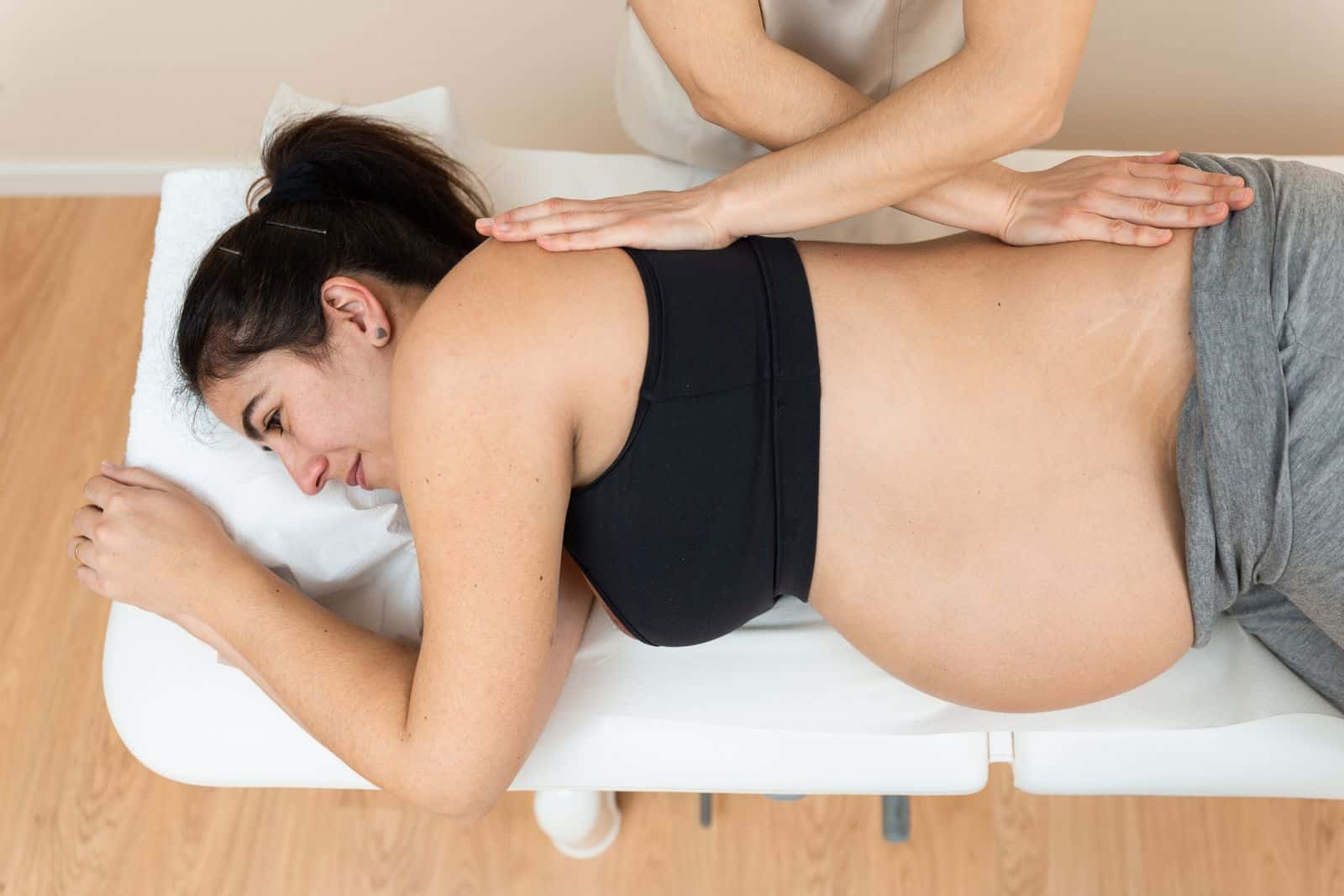
What is the symphysis and why does it hurt during pregnancy?
The symphysis is the bony connection between the two pelvic halves at the front of the pelvis. It is usually firm and hardly movable. During pregnancy, the hormone relaxin loosens the ligaments throughout the pelvis so that it can give way during childbirth. At the same time, with the growing belly, the center of gravity shifts forward, the pelvic position changes, and the muscles around the pelvis and hips have to work harder to maintain balance. If the symphysis is unevenly stressed during this process, it reacts with pain. This is also known as symphysis laxity or, when the joints at the back of the pelvis are also affected, as pelvic girdle pain.
This is facilitated by previous back pain, a previous pregnancy with pelvic discomfort, a lot of standing or lifting in everyday life, and one-sided loads, for example carrying a small child on one hip at all times.
Typical symptoms
- Painful or burning pain in front of the thigh, sometimes radiating to the groin or inner thighs
- Pain when walking, climbing stairs, turning in bed, getting out of the car, or standing on one leg, for example when putting on pants
- A shuffling walk, because big steps hurt
- Knocking or clicking in the pelvic area when moving
- Often accompanied by pain in the back of the pelvis or lower back at the same time
The complaints usually begin in the second or third trimester and can increase until birth if nothing is done to treat them. After birth, they usually subside within a few weeks.
What you can do yourself
- Legs together: When getting out of the car and turning in bed, keep your knees closed and rotate your pelvis as a unit. A pillow between your knees in the side position relieves the symphysis at night.
- Small steps, balanced load: Take the steps step by step, supporting yourself on both sides, distributing the load onto both hands.
- Getting dressed while sitting down: Getting on and off pants, socks and shoes while sitting, instead of standing on one leg.
- Dosage adjustment: Avoid prolonged standing, heavy lifting, and stretching movements. Swimming with the chest stroke strains the symphysis; backstroke or crawl legs are more comfortable.
- Waist belt: An elastic pregnancy or waist belt can be noticeably relieving in everyday life. We show you how to wear it properly.
- Movement instead of indulgence: Light, symmetrical activity such as short walks in short bursts or gentle exercises on the back or in a side position keep the muscles active and improve stability.
When should you see a doctor or midwife?
Contact your gynecologist, gynecologist or midwife if the pain is so severe that walking or climbing stairs is hardly possible, if it increases despite having passed urine for two weeks, if fever, bleeding, discharge or pain during urination occur, or if numbness or weakness in the legs occurs. Your doctor will issue a prescription for physical therapy for symphysis pain.
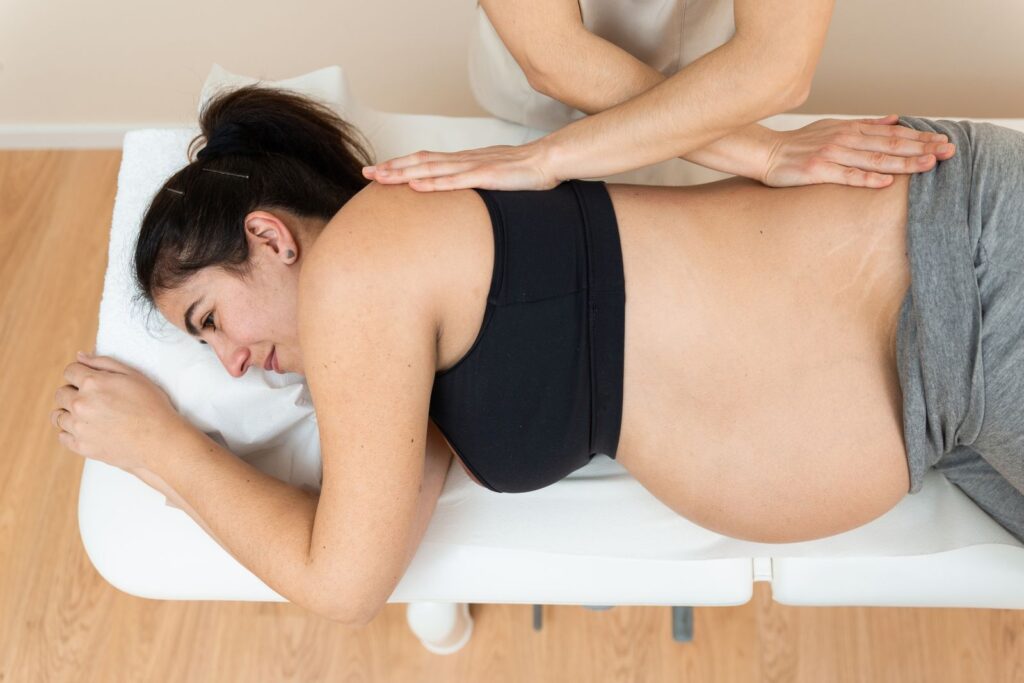
This is how we treat Symphysis pain in physiotherapy
First, we examine your pelvis, hips, lower spine, and your movement patterns in everyday life. Then we tailor the treatment to you and your gestational week:
- Gentle manual therapy: We equalise the position of the pelvic halves and mobilise the joints at the back of the pelvis (ISG) and the hips so that the symphysis is no longer pulled unevenly. More about this on our page Manual therapy and in the contribution to ISG syndrome.
- Stabilization exercises: Targeted, pregnancy-safe exercises for the deep abdominal, hip, and gluteal muscles give the relaxed pelvis back its stability. They are short, suitable for everyday use, and are adapted to the growing belly.
- Relaxation of tense muscles: The adductors on the inner thigh and the hip flexors often respond to symphysis pain with protective tension. We resolve them with soft tissue techniques and stretching.
- Tape and waist belt: An elastic Tape or a properly fitted pelvic belt supports stability between treatments.
- Everyday training: Getting up, turning around, stairs, carrying things: We practice the movements that cause the most pain in everyday life.
Pregnancy often brings several symptoms at the same time. If you also experience pain in your lower back, read our article Back pain during pregnancy; helps with swollen legs Lymphatic drainage during pregnancy.
With a medical prescription, we bill the treatment directly to your health insurance company. It is also possible to receive treatment on your own account.
Frequently asked questions about Symphysis pain
Are Symphysis pain dangerous for my child?
No. The relaxation of the symphysis is a normal process of pregnancy and only affects your pelvis, not the baby. It usually does not interfere with a natural birth. Nevertheless, discuss any severe discomfort with your gynecologist or midwife.
When can I start physiotherapy?
As soon as the pain starts to limit daily activities. The earlier the strain is adjusted and stability is trained, the less severe the symptoms become until the birth.
Do the pain go away after the birth?
Most often, within a few weeks, when the hormonal balance normalizes and the ligaments become firmer. If the pain persists after childbirth, further physical therapy is worth it to stabilize the pelvis and torso again.
Can I exercise with Symphysis pain?
Symmetrical, joint-gentle movements such as backstroke swimming, low-resistance home trainers, or short, short-distance walks are good. Extended movements, jogging, and jumping should be avoided while the symphysis is painful.
Pelvic pain during pregnancy? We are here for you
When every step is taken on the shinbone, Book an appointment online or call us at 044 585 99 49. Physio Waidfuss, Hönggerstrasse 118, 8037 Zürich Wipkingen, easily accessible by tram from Höngg and the entire 10th district.

Symphysis pain during pregnancy: What really helps?
Symphysis pain during pregnancy affects many women unexpectedly: a stabbing pain in the front of the thigh…
Read more
Back pain during pregnancy in Zurich | Physio Waidfuss
Back pain during pregnancy: This is how physiotherapy in Wipkingen can help you…
Read more
Lymphatic drainage during pregnancy
Pregnancy and swollen legs? Try lymphatic drainage. Lymphatic drainage for pregnant women Lymphatic drainage...
Read more