
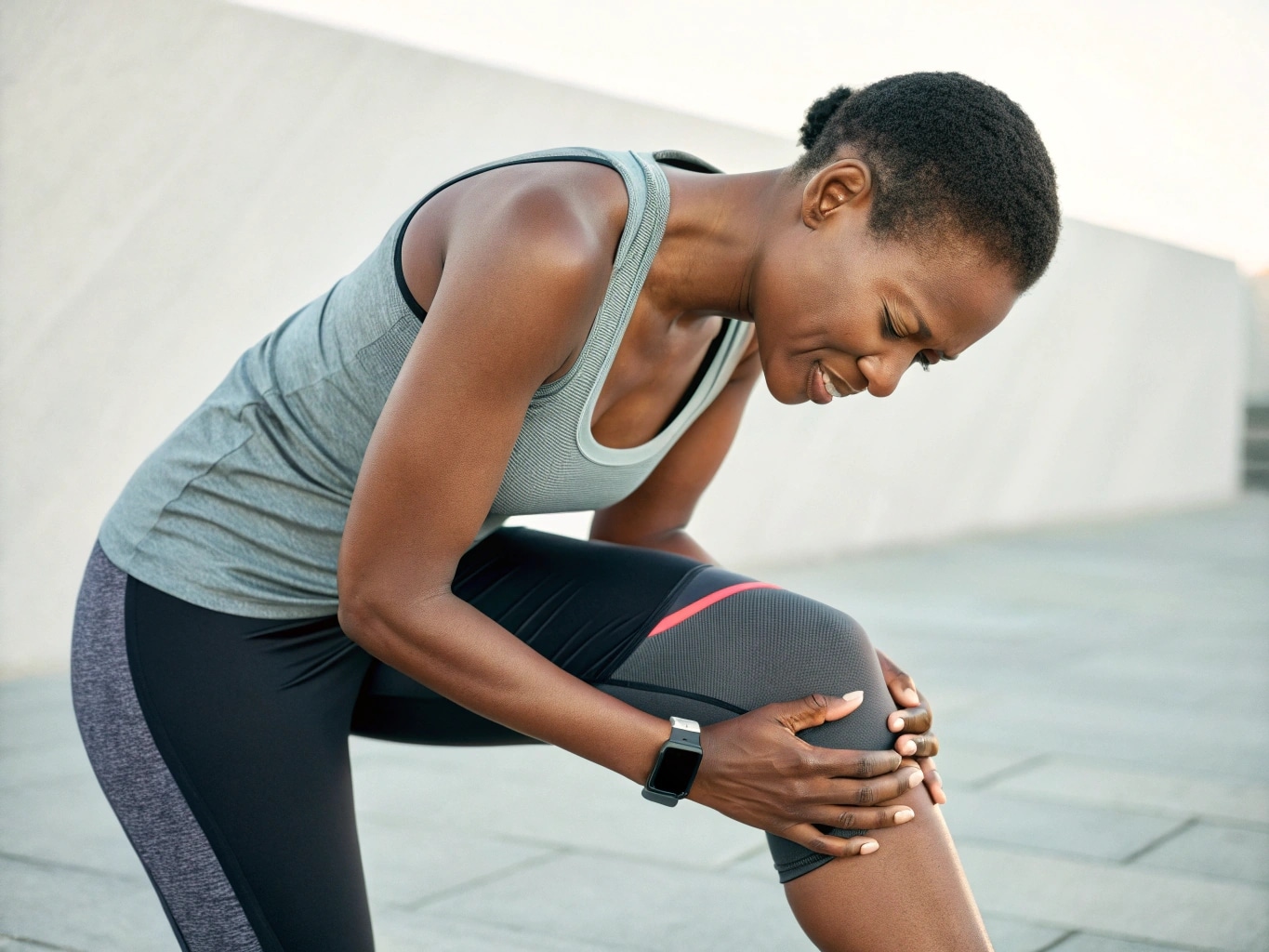
Meniscus injury: When the shock absorber in the knee fails

A sudden pulling when bending, a cracking in the knee and afterwards a diffuse pain when climbing stairs or squatting – meniscus injury is one of the most common knee problems, both in sports accidents and in older age due to normal wear and tear. At Physiotherapie Waidfuss in Zürich Wipkingen we help you restore your knee to be stable, pain-free and able to bear weight – both conservatively and after an operation.
What is the meniscus – and what function does it have?
The meniscus is a semi-moon-shaped cartilage disc in the knee joint that lies between the thigh and shin bones. Each knee has two menisci: the inner meniscus and the outer meniscus. They act like shock absorbers, distributing the load evenly in the joint and stabilizing the knee during rotational and flexion movements. If the meniscus tears, this buffering function is lost at the affected site – the knee joint is subject to more localized strain and reacts sensitively to certain movements.
Typical symptoms of a meniscus injury
- Pain in the joint space, Often aggravated by twisting movements or bending down
- Swelling of the knee, usually a few hours after the event
- Blockade or pinching sensation, When a meniscus fragment remains in the joint
- Feeling of instability when walking on uneven ground
- An audible or tangible Cracking or snapping in the knee
Causes: Acute crack or wear and tear?
Basically, there are two types of meniscus injuries. The first type is called a Acute rupture It usually occurs due to a sudden twisting of the knee when the foot is fixed – typical in skiing, football, or other sports that involve a lot of direction changes. Since such injury mechanisms often also affect the anterior cruciate ligament, we always investigate both structures in case of suspected combined injury; more about the cruciate ligament can be found in our post on ACL tear rehab. The . degenerative crack Conversely, it develops gradually through the natural wear and tear of the tissue with age, often without a single, memorable trigger.
Conservative or operative?
Whether a meniscus injury is treated conservatively (without surgery) or surgically depends on the shape, location, and size of the tear, as well as the age and activity level of the affected person – this decision is made by the treating physician. In both cases, physical therapy is a central component: conservatively, to relieve and stabilize the knee through targeted training, and after surgery (partial resection or suturing), to restore mobility, strength, and resilience.
Treatment at Physiotherapie Waidfuss
- Findings and diagnosis: We assess mobility, swelling, muscular control and endurance to tailor your therapy program to your specific needs.
- Anti-swelling measures: For example, in the case of pronounced swelling, the manuel lymphatic drainage the healing process.
- Joint-friendly load building at the Vario ergometer: Our Technogym exercise bike with adjustable handlebars already allows for gentle endurance and metabolism training from a knee flexion of 60 degrees – a significant advantage compared to traditional exercise bikes, especially during the early rehabilitation phase.
- Kinvent force measurement: With this, we make the build-up of your thigh muscles objectively measurable instead of only being felt as visible – more about this on our page about Power measurement.
- Proprioceptive and neurocentric training: Targeted balance and coordination exercises improve joint perception and thus protect against further injuries.
- Sport-specific re-entry: As part of our Sports Physiotherapy We will guide you step by step back to your usual level of physical activity.
Self-help: What you can do yourself
- During the acute phase, follow the PECH rule: rest, ice, compression (for example, elastic bandages), elevation.
- Avoid deep knee bends, rotational movements under load, and prolonged kneeling until a diagnosis has been made.
- Move the knee in the painless area to prevent stiffness – complete immobilization is usually not advisable.
- Wear sturdy, supportive footwear to help relieve pressure on the knee in everyday life.
- Only gradually build up the load again once movements are pain-free.
When should you see a doctor or go to physical therapy?
If sudden, severe pain, significant swelling, or a noticeable feeling of blockage in the knee occurs after twisting, you should have this checked by a doctor as soon as possible – especially to rule out a concomitant ligament injury. In cases of gradually increasing pain without a clear trigger, a physical therapy evaluation is also worthwhile to intervene early before the symptoms worsen.
More on the topic: Physiotherapy after an accident and Physical therapy after surgery.
Final thought
Whether caused by an acute sports injury or through gradual wear and tear – a meniscus injury does not have to be a reason for permanent limitations. With targeted diagnostics, modern equipment such as our Vario ergometer and Kinvent force measurement, and an individual training plan, we can get your knee back on track at Physiotherapie Waidfuss in Zürich Wipkingen. Contact us or Arrange an appointment online – we are happy to accompany you on the journey back to your daily routine and sports activities.
Tip for next season: With a Ski preparation Significantly reduce the risk of meniscus and cruciate ligament injuries.