



The Holistic View: When the Knee Fails, the Whole Body Suffers
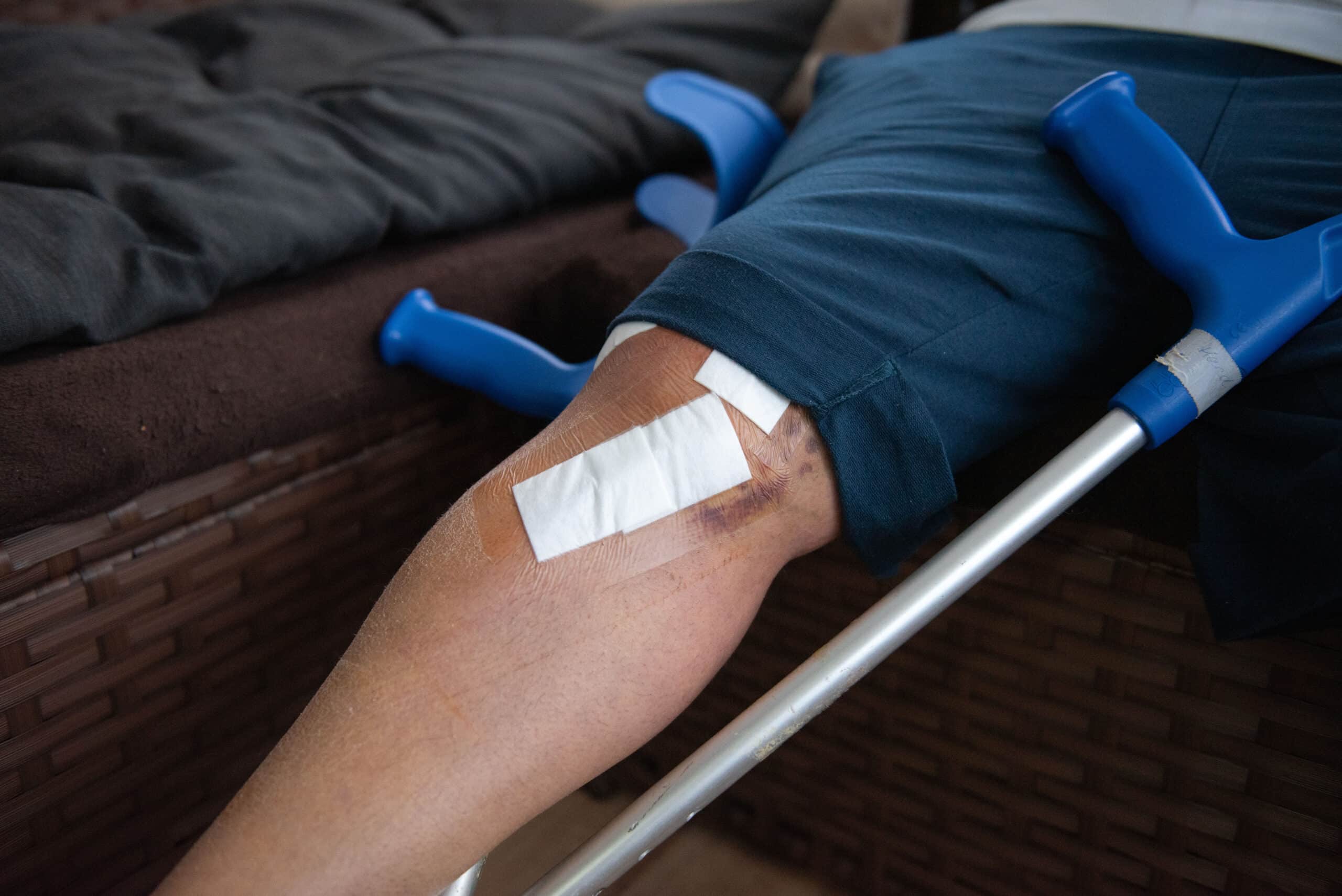
A torn anterior Cruciate ligament It affects the knee joint – but the entire organism feels the effects. Following the injury or surgery, you will walk on crutches for weeks and drastically alter your gait. You develop an unconscious compensatory posture.
What's happening? Your shoulders and neck are extremely tense due to the unusual strain from the crutches.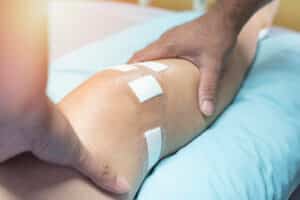 Your core muscles must compensate for the missing stability of the leg, and the opposite hip is severely tested by the overload. If we only treated the knee in therapy, we would be ignoring half of the problem. Successful rehabilitation involves your core, your hip joints, and your shoulder girdle from day one to break painful compensatory chains.
Neuro-centric Training: Redrawing the Brain's Map
The anterior cruciate ligament is not just a mechanical rope holding bones together. It is full of sensitive receptors (proprioceptors) that report to the brain in milliseconds about the position of the knee. If the ligament tears, the brain essentially loses the "GPS data" for this joint.
The consequence: The nervous system feels unsafe, throttles muscle strength, and sends pain or stiffness signals. This is where we come in with the Neurocentric training (Neuroathletic) Instead of just mindlessly lifting weights, we train your brain. Through specific visual exercises, balance training, and sensory stimuli, we help the nervous system to "perceive" the knee correctly again. As soon as your brain knows the knee is safe, the musculature can be controlled powerfully and smoothly again.
Gentle solutions for compensatory muscles
Due to the altered statics, stubborn, deep tensions often develop in the calf, thigh, or gluteal muscles. To break through these compensation patterns, we use proven manual techniques.
Methods such as targeted Trigger Point Therapy or – after thorough explanation and consultation – the Dry needling can be used selectively. These measures serve to efficiently and objectively release local hardening in the tissue, promote blood circulation, and clear the way for clean, pain-free exercise training.
Self-help: Everyday practical tips for every day
To optimally support the healing process, you can easily integrate these simple routines into your daily life:
-
Sensory Awakening (Scar and Knee Tapping): If the wound after surgery is healing well, gently and rhythmically tap around the kneecap and along the scar with your fingertips. This stimulates the skin nerves, improves tissue gliding, and sends an important «everything is okay here» signal to your brain.
-
Active core control while sitting: If you spend a lot of time working at a desk, slide to the front third of your chair. Place both feet flat on the floor and consciously tilt your pelvis slightly forward to straighten your spine. Gently engage your abdominal muscles. A strong core will relieve pressure on your legs every time you stand up and stabilize your entire body's axis.
When should you see a doctor or go to physical therapy?
Seek prompt medical or physical therapy evaluation if the knee suddenly swells severely, feels unstable (wobbling), fever occurs, or the pain increases contrary to the expected healing course.
More about building a rehabilitation program from the initial phase until returning to everyday life: Rehabilitation in Physiotherapy.
Frequently Asked Questions about ACL Tear Rehabilitation (FAQ)
When should physical therapy begin after ACL surgery in Zurich?
As early as possible. Often, in close consultation with your surgeon, we start just a few days after the procedure. At the beginning, the focus is on Lymphatic drainage, the focus is on reducing the swelling and gentle range-of-motion exercises to carefully mobilize the knee joint.
2. How do I get to the practice in Wipkingen if I'm still on crutches?
Our practice, Physiotherapie Waidfuss, is optimally connected to Zurich's public transport network and very easily accessible. The access routes are designed so that you can visit us safely and without major obstacles, even with walking aids, from Wipkingen, Höngg, and the surrounding area.
3. Why do I suddenly have neck and back pain?
This is a classic compensation pattern. Walking on crutches and the subconscious protective posture alter your entire biomechanics. The torso and neck suddenly have to take on tasks they are not made for. That is why in rehab we always treat the whole body, not just the knee.
4. How long will it be before I can jog or hike on the Hönggerberg again?
The rehabilitation for a torn ACL typically lasts 6 to 12 months. The process is highly individual and depends on your goals. We will gradually prepare you with dynamic exercises in the room and targeted stability checks for uneven surfaces before we clear you for such athletic activities.
5. Will the costs for the long-term rehabilitation be covered by health insurance?
Yes. In the case of a medically diagnosed cruciate ligament tear (often an accident), your accident insurance (UVG) or, failing that, basic health insurance (KVG) will cover the costs of the prescribed physiotherapy, minus the usual deductible.
Your comeback starts here in Zurich Wipkingen and Höngg
A Cruciate ligament tear demands patience, but with the right support, you will return to your active life stronger. At Physiotherapie Waidfuss, we combine profound rehabilitation knowledge with innovative neuroathletics and a holistic view of your individual situation.
If you are in Zurich, Wipkingen, Höngg or live in the immediate vicinity and are looking for a reliable partner for your cruciate ligament rehabilitation, we are happy to help. Contact our team – we look forward to working with you to improve your stability and confidence.
After an accident? Information on the cost coverage by the Accident Insurance (UVG) and on the course of therapy can be found on our page. Physiotherapy after an accident in Zurich.

Meniscus injury: When the shock absorber in the knee fails
Meniscus injury: When the shock absorber in the knee fails A sudden pulling when turning, a crack in the knee…
Read more
Sharp pain while jogging? How to get the runner's knee (iliotibial band syndrome) under control
The temperatures are rising, the running shoes are laced up, and the first few kilometers along the Limmat are running as if by themselves.…
Read more
After the cruciate ligament rupture: The way back to sport in Zurich
Your path back to sports after a torn ligament: One wrong step, one abrupt turn, a cracking sound...
Read more
Knee injury after accident what to do?
Following an accident resulting in a knee or leg injury – whether a ligament tear, meniscus tear, or fracture – we accompany you...
Read more
Hamstring injury: symptoms, rehabilitation and prevention
Hamstring injuries usually start suddenly: a stabbing pain in the back of the thigh, often…
Read more
Stretching program
Your stretching program Stretching is an essential foundation for your mobility and well-being.
Read more