
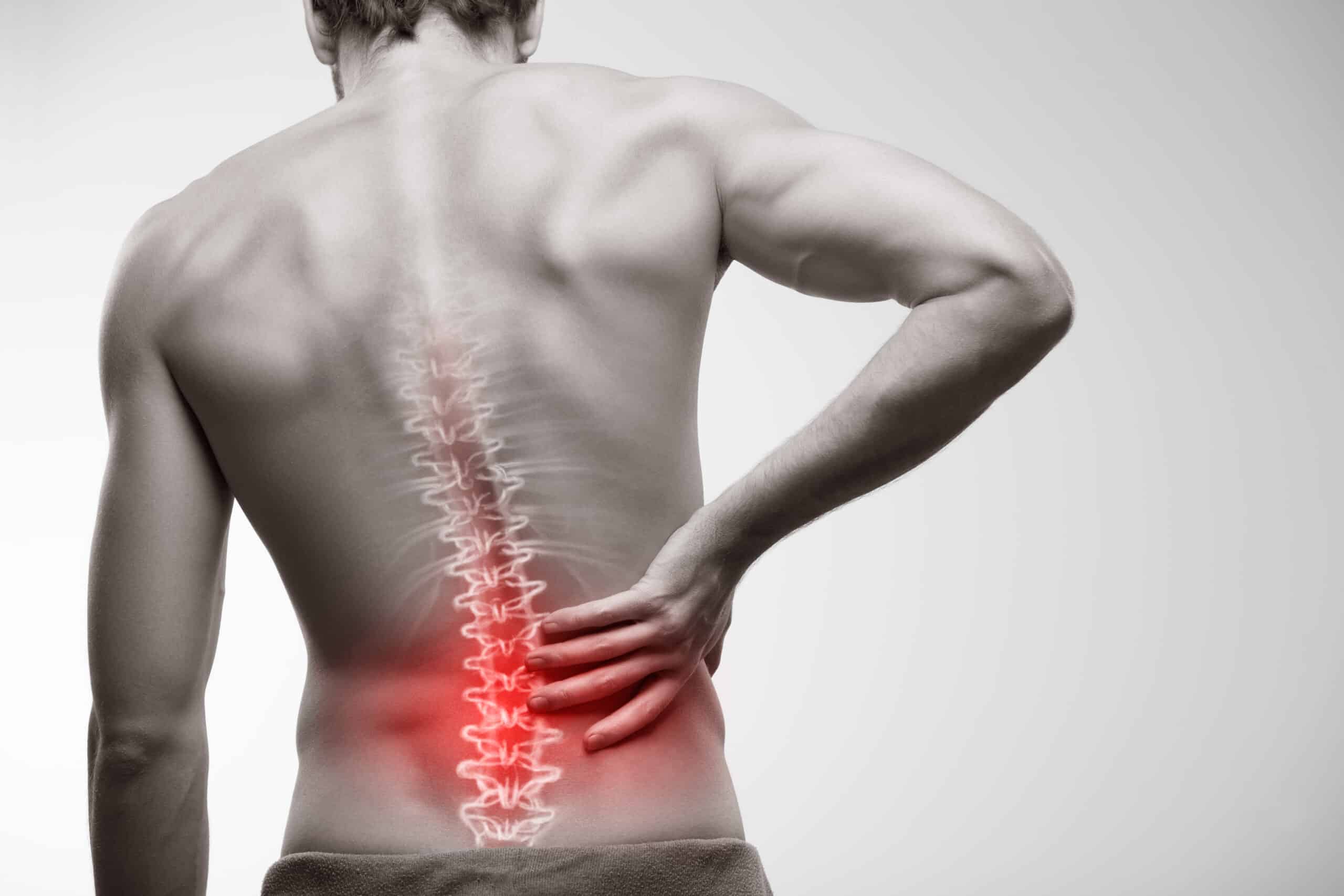
The „lumbago“ (acute lumbago): your brain's protective reflex
The „Lumbago“ (Acute Lumbago): The protective reflex of your brain
Almost everyone has experienced it: a banal everyday movement - picking up a sock, lifting a box or a clumsy turn during sport - and suddenly a sharp pain shoots through the lower back. The sufferer literally freezes. It is almost impossible to straighten up, you are standing at an angle and every movement becomes agony. In the past, it was often said that a vertebra had „dislocated“ or that something was „blocked“. Today we know: Anatomically, this is almost never the case. Vertebrae do not simply dislocate.
What is really happening here? Lumbago is usually a Protective reflex of the nervous system. Your brain constantly monitors all movements. If it senses insecurity in a certain situation (e.g. when bending down, perhaps in combination with tiredness or stress), it pulls the emergency brake. It sends a command to the deep back muscles: „Tighten up immediately to stabilize the spine!“ It is therefore a massive one, neuro-muscular protective voltage. The muscles spasm reflexively to prevent movement. This enormous pressure on the tissue causes the pain. Your „alarm system“ has simply overreacted.
The strategy for acute lumbago: Since no structure needs to be repaired, our aim is to calm the brain's alarm system („down-regulation“).
-
Safety through gentle movement: Bed rest often signals „illness“ to the brain and increases sensitivity to pain. We have to prove to the brain that movement is safe. We do this by offering very small, pain-free movement.
-
Breathing techniques: Breathing is the direct line to your autonomic nervous system. Targeted diaphragmatic breathing reduces stress levels in the body, which often leads to a reduction in muscle tension in the back.
-
Discharge: Positions such as the stepped position help to relax the large hip flexor (psoas), which immediately reduces the tension on the lumbar spine.
„Back pain“ (chronic/unspecific): If the alarm is running continuously
The situation is different with back pain that builds up over weeks or recurs repeatedly. In this case, there is often no single event. Doctors speak of „non-specific back pain“. This does not mean that you are imagining the pain, but that no single damaged structure (such as a broken bone) is the sole cause.
The problem with the input Our brain constantly needs clear information (inputs) from the body in order to control muscle tension correctly. This information comes from:
-
The movement itself.
-
The organ of equilibrium.
-
The self-perception of the joints (proprioception).
In our modern everyday lives, we sit a lot and often move monotonously. The signals that reach the brain become „blurred“. The brain can no longer accurately assess the situation behind us. The logical consequence of the brain is caution. And caution often manifests itself physically as increased basic tension and pain signaling.
The strategy for general back pain: Massages often only help in the short term, as they treat the symptom but not the cause (the lack of exercise). Our approach is more active:
-
Diversity of movement: We break up monotonous patterns. We mobilize the thoracic spine and hips to relieve pressure on the lower back.
-
Improvement of body awareness: Through specific exercises, you learn to control your spine precisely again. Once the brain can clearly „see“ and control movement again, it no longer has to build up painful protective tension.
-
Nerve mobilization: It is often not the muscles but the nerve tracts that have become immobile due to one-sided posture. We use gentle gliding movements to make these pathways supple again.
When do you need to see a doctor? (Red Flags)

We can achieve a great deal with physiotherapy for both lumbago and back pain. However, warning signs that you should consult a doctor immediately are: numbness in the buttock area („breeches anesthesia“), loss of bladder or bowel control, acute paralysis in the leg or fever in combination with back pain.
Conclusion: Exercise heals
Whether it's an acute lightning strike in the back or chronic pulling: Total rest is almost always the wrong approach. Your nervous system needs high-quality movement information to switch off the pain alarm. We help you to find exactly the right amount and type of movement that gives your brain a sense of security and relaxes your back in the long term.

The SI Joint Syndrome: Is it the disc or the pelvis?
SI joint syndrome The pain is extremely deep, almost in the buttocks, often radiates unilaterally into the thigh and is...
read more
Sciatica back pain Zurich – we treat it in Wipkingen
Back spasm and sciatica: When your back suddenly locks Up. A wrong step while getting out of the trampoline,...
read more
Back Pain in Old Age Zurich | Physio Waidfuss Wipkingen
Back pain in old age: Why it's not "normal aging" "It's just from aging" – we hear this sentence...
read more
Diagnosis of herniated disc (disc hernia)
Diagnosis of a herniated disc (disc hernia) - Why nerve mobilization often helps better than surgery For many patients...
read more
Lumbago, back spasm or „just“ back pain? Why your back „shuts down“ and how we solve it
Lumbago, lumbago or „just“ back pain? Back pain is by far the most common reason why...
read more
Put an end to office back pain in Zurich Wipkingen
Put an end to office back pain Do you know what it's like? A long working day, lots of screen time - your neck gets...
read more
Stretching program
Your stretching program Stretching is an essential foundation for your mobility and well-being....
read more
Workplace ergonomics - Do you work at a computer?
Ergonomics at the workplace: Effective measures to combat back pain and neck tension You're probably familiar with...
read more
Back pain: understanding and solutions
Back pain: can have many causes Back pain is one of the most common complaints that affect people....
read more
Lumbago - What really helps to relieve the pain
Lumbago - Understanding lower back pain: Important information for you Imagine you are lifting...
read more
Piriformis syndrome - What helps against pain in the buttocks?
Piriformis syndrome and lumbago at a glance What is piriformis syndrome? Piriformis syndrome is a...
read more
Back pain - causes, symptoms and treatment options
Back pain - causes, symptoms and treatment options Back pain is a widespread problem.
read more