
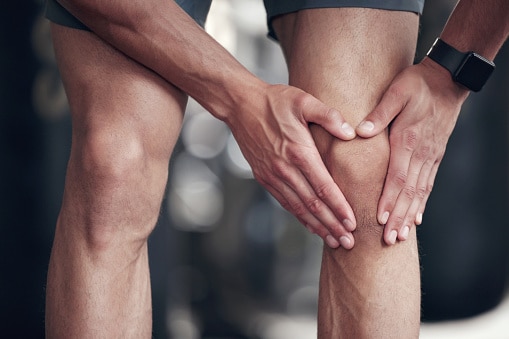


Everything you need to know about knee pain: Causes and treatment options
Pain on the inside of the knee
Pain on the inside of the knee can have numerous causes. One common cause is inflammation of the pes anserinus tendon, which is caused by overloading or unfavorable movement patterns. Meniscus injuries, particularly to the medial meniscus, can also cause pain on the inside of the knee. Typical symptoms are swelling and restricted movement.
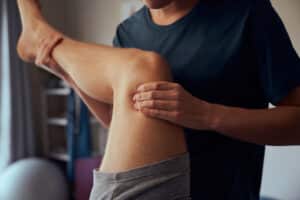
Treatment options:
- Physiotherapy: Individually adapted exercises to strengthen and stretch the muscles help reduce the strain on the knee and promote healing. Regular physical therapy aims to strengthen the muscles around the knee and improve mobility.
- Taping the knee: Special taping techniques can help to stabilize and relieve the knee. The tape supports joint function and reduces pain by structurally supporting the knee and preventing unwanted movements.
- Active therapy: Moderate activities such as cycling and light stability training can improve joint function and reduce pain. Balance exercises are also helpful to stabilize the muscles around the knee.
Pain on the outside of the knee
A frequently diagnosed cause of pain on the outside of the knee is the so-called iliotibial band syndrome (ITBS). This condition causes irritation of the iliotibial band due to overuse, especially in runners and cyclists. This type of knee pain is characterized by burning or a stabbing pain on the outside of the knee.
Treatment approaches:
- Trigger point therapy IMTT®: Trigger point therapy can be used to treat painful muscle tension in a targeted manner. Special pressure techniques are used to release the muscle knots and relieve the pain.
- Stretching exercises: Regular stretching exercises for the iliotibial band are essential to reduce tension in the band and increase flexibility.
- Taping the knee: Machine or manual taping gives the knee stability and relieves the affected iliotibial band. This can promote healing and relieve pain.
- Active therapy: Light stability training and cycling are ideal for taking the strain off the IT band and strengthening the knee at the same time. Balance exercises are also useful for training and stabilizing the muscles around the knee.
Pain behind the kneecap
Pain behind the kneecap, also known as chondromalacia patellae or patellofemoral pain syndrome, is often caused by a misalignment of the kneecap. This can be caused by weak thigh muscles and misalignment of the legs. Knee pain during activities such as climbing stairs or after prolonged sitting is characteristic.
Therapy options:
- Physiotherapy: Targeted strengthening and stabilization exercises are essential. One focus here is on strengthening the thigh muscles to bring the kneecap into the correct position.
- Palpation: Precise diagnostic scans allow the muscles and joint structures to be better assessed and individual exercise programs to be developed.
- Active therapy: Cycling and light stability training strengthen the surrounding muscles and relieve pressure on the kneecap. Balance exercises are also helpful to improve the interaction of the muscle groups and increase stability.
Knee osteoarthritis
Knee osteoarthritis is a degenerative joint disease in which the cartilage in the knee gradually breaks down. This leads to pain, swelling and stiffness in the knee. Those affected often complain of difficulty getting going in the morning and pain after prolonged periods of exertion.
Treatment options:
- Physiotherapy: Exercise and strengthening programs at Waidfuss Physiotherapy support joint function and help to build up the muscles around the knee. Targeted exercises improve the mobility and stability of the knee joint.
- Lymphatic drainage: Manual lymphatic drainage helps to reduce swelling in the knee and supports the healing process by promoting lymph flow.
- Biomechanical advice: Improving everyday movements and correcting walking techniques can help to minimize the strain on the knee.
- Active therapy: Cycling and light stability training are ideal for promoting joint function and strengthening the muscles. Regular balance exercises also help improve stability and relieve strain on the joints.
Patella tip syndrome
Patella tip syndrome (jumpers knee) affects athletes in particular and causes pain on the underside of the kneecap. It is caused by chronic overloading of the patellar tendon and is often associated with a thickening of the tendon.
Treatment methods:
- Stretching and strengthening exercises: Special exercises to relieve the tendon and strengthen the surrounding muscles play a central role in the treatment of patella tip syndrome.
- Physiotherapeutic measures: Physiotherapy treatments include massages, cold and heat therapy as well as mobilizing exercises that are specially tailored to the needs of athletes.
- Taping the knee: The tape technique can be used to support the patellar tendon and stabilize the knee.
- Active therapy: Cycling and light stability training are important to relieve the strain on the tendon and strengthen the muscles. Balance exercises help to improve control over movements and avoid incorrect strain.
Plika syndrome
Plica syndrome is characterized by irritation or inflammation of a fold of mucous membrane in the knee joint. It can be caused by repeated microtrauma or incorrect loading. Typical symptoms are pain and a snapping sensation in the knee.
Treatment recommendations:
- Fitness programs: Targeted mobilization and strengthening programs in physiotherapy help to strengthen the muscles and relieve the inflamed mucosal fold.
- Manual therapy: Various manual techniques aim to improve the mobility of the knee joint and relieve pain points.
- Taping the knee: Professional taping can relieve the affected structures and minimize the snapping sensation in the knee.
- Active therapy: Cycling and light stability training help to strengthen the muscles and stabilize the knee. Balance exercises are also useful for improving the coordination and stability of the knee joint.
Cysts in the hollow of the knee
A Baker cyst, also known as a knee cap cyst, is caused by fluid accumulation in the knee joint. It manifests itself as swelling and a feeling of pressure in the knee joint.
Treatment options:
- Lymphatic drainage: The manuel lymphatic drainage helps to drain excess fluid and reduce swelling.
- Physiotherapy: Specialized exercises are used to improve the mobility of the knee joint. The aim is to reduce the pressure in the hollow of the knee and reduce the cyst.
- Active therapy: Cycling and light stability training help to strengthen the muscles and reduce the pressure on the cyst. Balance exercises also contribute to the stability of the knee joint.
Self-help: What you can do yourself
Move your knee regularly within a pain-free range; avoid prolonged sitting with the knee bent at a sharp angle; cool down if you experience acute swelling; and ensure you wear well-fitting, supportive footwear.
When should you see a doctor or go to physical therapy?
Seek prompt medical evaluation if the knee becomes severely swollen or unstable after an accident, feels blocked, or the pain persists despite conservative treatment for several weeks.
Conclusion
Knee pain can have various causes and requires targeted and individual treatment without the use of medication. At Physiotherapie Waidfuss we offer comprehensive therapy options that are tailored to your needs. Whether you suffer from knee osteoarthritis, patella flare syndrome, or pain on the inside or outside of the knee – we are your experts for the targeted treatment of your knee pain. Trust our many years of experience and patient-oriented care.
For further information and to Making an appointment visit our website or contact us directly. We are happy to be there for you and support you on your way to a pain-free and active life.

Meniscus injury: When the shock absorber in the knee fails
Meniscus injury: When the shock absorber in the knee fails A sudden pulling when turning, a crack in the knee…
More
Sharp pain while jogging? How to get the runner's knee (iliotibial band syndrome) under control
The temperatures are rising, the running shoes are laced up, and the first few kilometers along the Limmat are running as if by themselves.…
More
Stubborn heel pain: heel spur or plantar fasciitis?
For many sufferers, the day begins with a nasty surprise: You get out of bed, strain your foot and…
More
After the cruciate ligament rupture: The way back to sport in Zurich
Your path back to sports after a torn ligament: One wrong step, one abrupt turn, a cracking sound...
More