
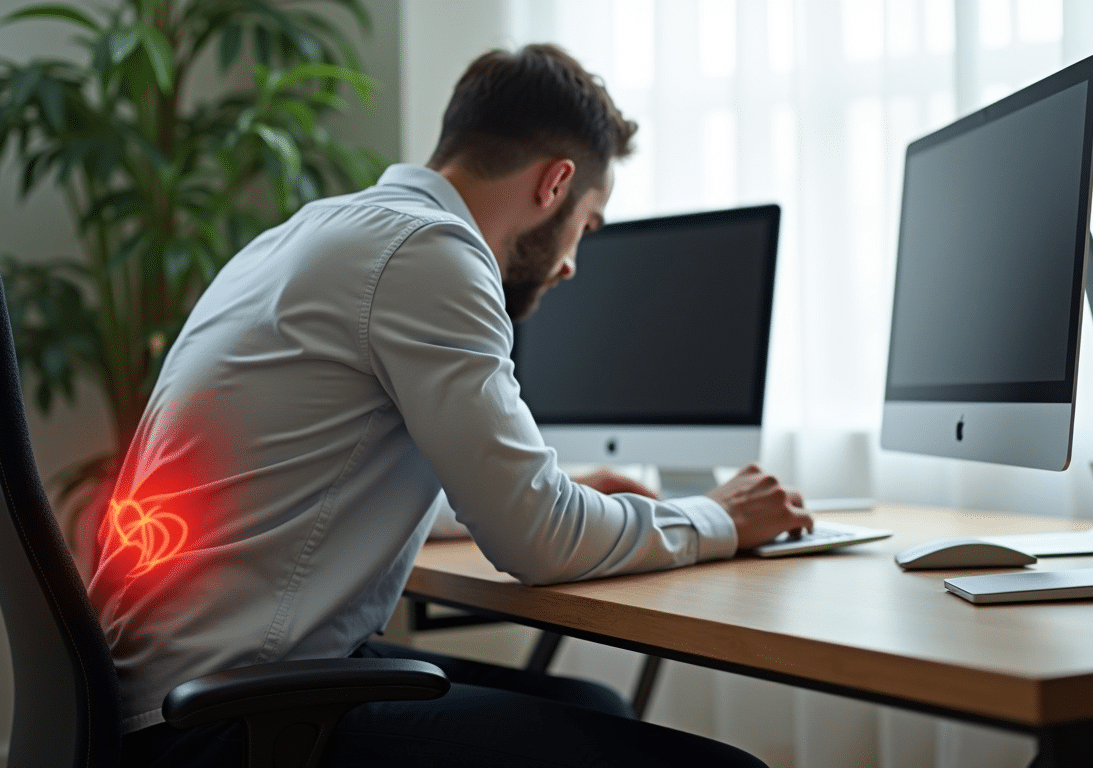
Tips for ergonomic workplace design
What is ergonomics?
Ergonomics is concerned with the study and design of working environments in order to promote people's health and performance. The aim is to design workstations so that you can work comfortably and safely in order to avoid strain and injury. A well ergonomically designed workstation takes into account aspects such as sitting position, monitor height, keyboard and mouse alignment and lighting.

However, ergonomics is only part of the solution. The other key to success is regular activity and variety in daily work. A sedentary lifestyle can lead to muscle tension and chronic pain, which is why it is so important to integrate movement into daily life.
Tips for ergonomic workplace design
- Correct sitting positionMake sure your office chair is adjusted properly. Your feet should be flat on the floor, your knees at a 90-degree angle, and your back fully supported by the backrest. An ergonomic chair that supports your lower back can work wonders.
- Monitor settingYour monitor should be at eye level and about an arm's length away. This prevents you from having to tilt your head up or down, which can cause neck tension.
- Alignment of the keyboard and mousePosition your keyboard and mouse so that your arms are in a relaxed, slightly angled position. Avoid excessive stretching and ensure that your wrists are straight.
- Work breaks and exerciseTake regular breaks to get up and stretch. This promotes blood circulation and reduces the strain on your muscles. Especially activity and variety in the workplace are crucial for maintaining your health. A short stretching routine, such as stretching your arms and tilting your head to one side, can help relieve tension.
- Optimal lightingGood lighting at the workplace prevents you from having to strain your eyes. This can indirectly help to reduce headaches and neck tension.
- Change of workplaceAlternatively to your desk, use standing desks or height-adjustable tables to regularly change your working position. This prevents one-sided strain and promotes movement.
- Plan exercise breaksPlan deliberate short exercise breaks during the day. Short walks or light sports exercises during these breaks promote blood circulation and reduce stress.
Typical symptoms caused by poor ergonomics
- Neck tension and shoulder pain
- Back pain in the lower and upper back
- Headaches caused by poor posture
- Numbness or tingling in the arms and hands
The importance of ergonomics for your health
By adapting your workplace to ergonomic standards, you can significantly reduce the risk of musculoskeletal disorders. Regular ergonomic adjustments not only promote your physical health, but also your productivity and overall well-being.
But ergonomics alone is not enough. The key to success lies in the combination of good ergonomics with regular movement and variety in the workday.
Self-help: Active exercises and variety at work
An ergonomic workplace design is the basis, but it is just as important to integrate activities into your daily work routine. Here are some active exercises and tips on how you can integrate more movement and variety into your workplace:
- StretchingStart your day with a short stretching routine. Gently tilt your head from side to side, stretch your arms above your head and do shoulder circles.
- Short exercise breaksStand up briefly every hour, walk around and stretch. Simple exercises such as squats, leg lifts or a walk around the office can be very helpful.
- Dynamic sittingChange your seating position regularly and try not to stay in one fixed position for too long. Use a gymnastics ball as a seat or a balance cushion to vary your posture.
- Strengthening exercisesIntegrate light strengthening exercises that you can also do at work, such as wall push-ups or calf raises. These exercises strengthen your muscles, improve your posture and prevent pain.
- Walking meetingsIf possible, schedule meetings outside and take a walk during that time. Exercise in the fresh air is energizing and promotes creative thinking.
When should you have a medical or physical therapy consultation?
Seek help if despite ergonomic adjustments, pain in the neck, shoulders, or back persists, tingling or numbness in the hands occurs (e.g., indicating carpal tunnel syndrome), or headaches are regularly associated with screen work.
Support from Physiotherapie Waidfuss for ergonomics and activity in the workplace
Our experienced physiotherapists at Physiotherapie Waidfuss provide you with targeted support in optimizing your workplace. We offer individual consultations and ergonomic analyses to adapt your workplace in the best possible way. We take your specific needs into account and give you practical tips on how you can make your working environment more ergonomic.
We also show you effective, active exercises, exercises that you can easily integrate into your daily work routine. These exercises help prevent tension and strengthen your muscles. For example, regular stretching exercises and small breaks in activity can help increase flexibility and relieve pain.
Our advice However, it goes beyond pure ergonomics. We also offer tips and exercises to integrate activity and variety into your daily routine. Because the combination of an ergonomically designed workplace and regular exercise is the key to success.
Our goal is to help you design your workplace in such a way that you can work healthily and pain-free in the long term. Contact us todayto create a consultation and exercise plan tailored to your individual needs. Let's work together to improve your ergonomic conditions and your daily exercise habits and increase your well-being at work.
With these simple but effective tips, you can optimize your working environment ergonomically and promote your health at work. Remember: Ergonomics and regular activity and variety are the key to success. Trust the expertise of Physiotherapy Waidfussto treat your complaints sustainably and increase your well-being.

Spinal canal stenosis: When walking suddenly becomes a torture
What is a spinal canal stenosis? It is a gradual process that severely restricts everyday life: they make you…
Read more
Neck pain and headaches: The way out of the home office trap
Neck pain and headaches The gaze is fixed on the screen, the shoulders move involuntarily…
Read more
Back pain during pregnancy in Zurich | Physio Waidfuss
Back pain during pregnancy: This is how physiotherapy in Wipkingen can help you…
Read more
Storage dizziness (BPLS): Vestibular physiotherapy in cases of dizziness attacks
The room rotates even though you lie completely still. They rotate in the bed, and for a few seconds everything…
Read more