
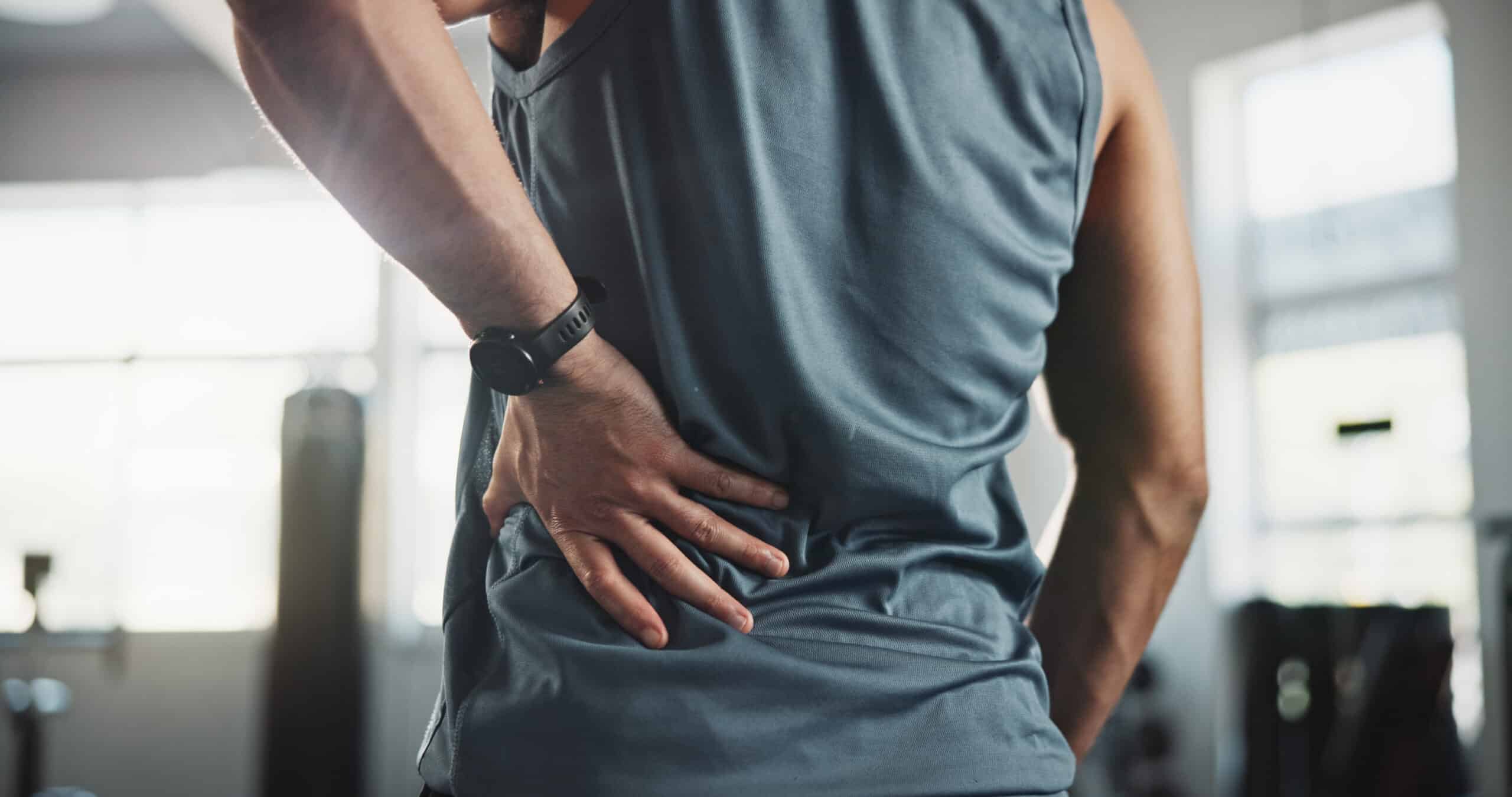
Back pain when lifting
Our treatment relies on concrete craftsmanship and active training:
-
Pain Modulation & Manual Therapy: In cases of acute blockages or lumbago, we reduce the extreme protective tension in the back muscles. We achieve this through gentle joint mobilizations of the lumbar spine and targeted trigger point treatments.
-
Mobilization in preparation: For example, we use our exercise bike with adjustable crank length. This enables gentle, pain-free mobilization of the leg joints and promotes blood circulation in the lumbar region without straining it.
-
Hebemechanic & Neuro-Integration: Before force is exerted, the brain must plan the movement. We integrate lightweight neurocentric approaches (balance training) to improve unconscious core stabilization before you even reach out.
-
Specific strength training: With Free weights let's train the deadlift. This everyday movement is crucial to gradually and safely increase your back's tolerance limit.

Strategies and everyday practical tips for home:
-
The inner corset (bracing): Before lifting, take a deep breath into your entire abdominal cavity (including laterally into your flanks) and tighten your abdominal muscles as if you were expecting a light nudge to the stomach. This pressure supports the spine from the inside.
-
The hip hinge: Practice the movement of pushing your hips back (as if closing a car door with your buttocks) while keeping your back neutral. The knees bend only slightly.
Self-help: How to relieve back pain in everyday life
-
Elevate near the body: Hold the load as close to your body as possible, rather than with your arms outstretched.
-
Legs instead of back: Get on your knees and use your leg strength to lift the load.
-
Activate hull: Just before lifting, contract your abdominal and back muscles slightly.
-
Avoid rotational movements: Never lift with a bent and twisted back at the same time.
When should you see a doctor or go to physical therapy?
Seek medical or physical therapy help promptly if you experience any of the following after lifting: Pain radiating into the leg, a numbness occurs, strength in the leg or foot decreases, or the pain does not subside after one to two weeks despite rest.
Many of our patients also use our services to targetly build up their trunk and leg strength. Small group training.
The correct pattern of movement when lifting can be learned: In the Functional Movement Theory (FBL) We train exactly these everyday movements.
Frequently asked questions about back pain when lifting
1. What is the best first aid for acute lower back pain (lumbago) after lifting? Avoid strict bed rest. The psoas position (lying on your back with your lower legs placed on a chair at a 90-degree angle) relieves pressure on the intervertebral discs. Move within an absolutely pain-free range of motion.
2. Am I even allowed to train with weights if I have back pain? Yes, absolutely. Properly dosed and under clinical guidance in our practice in Wipkingen, free weights are the best tool to prepare the back for the demands of everyday life in Zurich.
3. Is lifting with a rounded back fundamentally harmful? No. The spine is allowed to round. It only becomes painful if you repeatedly round under high load without your muscles being specifically trained for this position.
4. Do you also treat radiating pain into the leg (sciatica)? Yes. If the pain radiates into the leg after lifting, we use specific neurological and manual tests to check whether a nerve root is irritated and adjust the therapy accordingly.
5. How long will it take before I can lift heavy things again? That depends on the tissue damage. An acute muscle strain often settles down after 1-2 weeks. However, the sustainable development of core and leg strength to prevent relapses requires 8 to 12 weeks of regular training.
Do not let the fear of lifting dictate your daily life. The team at Physiotherapie Waidfuss on Hönggerstrasse in Zurich is your contact for biomechanical analyses and targeted strengthening of the lumbar spine. Book an appointment online now.

Symphysis pain during pregnancy: What really helps?
Symphysis pain during pregnancy affects many women unexpectedly: a stabbing pain in the front of the thigh…
Read more
Spinal canal stenosis: When walking suddenly becomes a torture
What is a spinal canal stenosis? It is a gradual process that severely restricts everyday life: they make you…
Read more
Back pain during pregnancy in Zurich | Physio Waidfuss
Back pain during pregnancy: This is how physiotherapy in Wipkingen can help you…
Read more
Back pain due to sports Zurich | Physio Waidfuss
Back pain from sports: When training instead of balance brings stress to the back Zürich: They…
Read more
The SI Joint Syndrome: Is it the disc or the pelvis?
SI joint syndrome The pain is extremely deep, almost in the buttocks, often radiates unilaterally into the thigh and is...
Read more
Acute lumbago sciatica Zurich – We treat you in Wipkingen
Back spasm and sciatica: When your back suddenly locks Up. A wrong step while getting out of the trampoline,...
Read more
Back Pain in Old Age Zurich | Physio Waidfuss Wipkingen
Back pain in old age: Why it's not "normal aging" "It's just from aging" – we hear this sentence...
Read more
Diagnosis of herniated disc (disc hernia)
Diagnosis of a herniated disc (disc hernia) - Why nerve mobilization often helps better than surgery For many patients...
Read more