
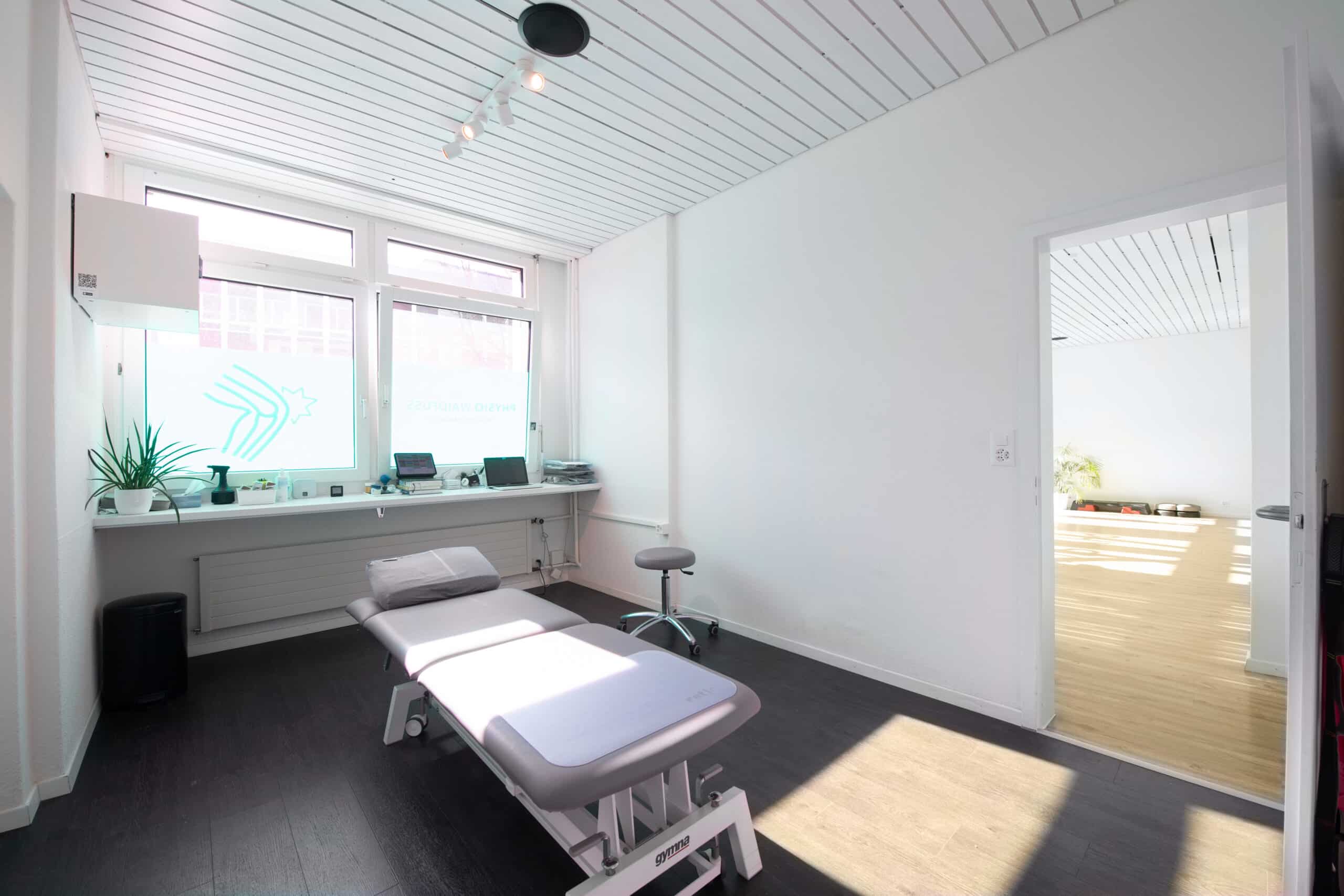
[Image placeholder: Title image – Patient: in storage maneuvers/vestibularist training]
The room starts to spin, even if you lie completely still. They start to spin in bed, and for a few seconds everything goes haywire. Dizziness is one of the most common complaints there is – and one of the most common triggers is a problem that can be treated directly in physiotherapy: the benign paroxysmal positional vertigo (BPLS). In our practice in Zurich Wipkingen, we regularly see adult patients who experience exactly these attacks – often surprised to find that their inner ear balance organ is the cause, not the circulatory system or the cervical spine.
What is a storage scam?
Our inner ear houses our balance organ with tiny calcium carbonate crystals (otoconia), which are normally firmly anchored. If individual crystals detach – for example after a head injury, an inner ear infection, or for no apparent reason – they can enter one of the canals. With certain head movements, they swirl there and cause a violent, but brief rotational vertigo. This is the benign paroxysmal positional vertigo: benign (benign), paroxysmal (attack-like), and positional-dependent.
Important to know: BPLS is one of the most common causes of dizziness among otherwise healthy adults in working life – not just a problem in older age.
Typical symptoms
- Sudden, violent rotation dizziness with certain head movements – classically with turning in bed, lying down or getting up, or with the head in the neck-down position
- The attack usually lasts only seconds to less than a minute.
- Often accompanied by nausea
- Between the attacks, affected people are usually symptom-free.
- No hearing loss, no tinnitus, no cognitive impairment – if these symptoms appear, a medical examination is necessary (see below)
Causes
In most cases, no definitive cause can be found (idiopathic BPLS). Known triggers include:
- Skull or head trauma, even minor impacts
- Long periods of bed rest or unusual prolonged head tilts (e.g., at the dentist or hairdresser)
- Previous inner ear inflammation or a vestibular dysfunction
- Migraine disorders may favor the occurrence of the disease
When to see a doctor, when to see a physiotherapist?
Brief, storage-dependent rotational pain without warning signs can usually be treated directly with physiotherapy. Medical/ENT examination is important, If occurring in addition: hearing loss or ear noises, double vision, speech or swallowing difficulties, numbness, severe headaches, or if the dizziness persists for longer than a few minutes or persists permanently. In these cases, a neurological or internal medical cause must be ruled out before targeted vestibular treatment is considered appropriate.
Treatment at Physiotherapie Waidfuss
The great advantage of BPLS is that it can often be significantly alleviated or completely resolved in as few as one to two sessions with targeted handling maneuvers.
- Diagnostics: With specific storage tests (e.g., Dix-Hallpike test), we determine which nerve pathway is affected – the treatment is tailored exactly to that.
- Liberation maneuver: Targeted storage maneuvers (e.g., after Epley or Sémont) bring the errant crystals back to their place.
- Vestibular rehabilitation training: For recurrent complaints or after a vestibular disorder, we specifically train the compensation ability of the balance system – in addition, you can also Neuro-centered training help improve the cooperation between the eyes, inner ear, and nervous system.
- Posture and neck findings: Since tension in the neck vertebrae can trigger or exacerbate dizziness, we also examine the mobility and musculature of the neck vertebrae.
What you can do yourself
- Stay calm – the attack is brief and uneventful, even though it feels frightening
- Avoid movements that cause dizziness on a permanent basis – those who over-protect themselves delay the natural compensation of the balance system.
- In everyday situations of uncertainty: slow, controlled head movements instead of abrupt turns
- Note down triggering situations (e.g., certain head positions) – this helps us with targeted diagnosis
Note: If your dizziness tends to be accompanied by general walking instability or an increased risk of falls in older age, rather than by brief, storage-dependent attacks, please also read our article on Fall prevention & balance training.
More on the topic: Fall prevention and balance training and Physiotherapy for senior women and men.
Our advice
No one has to simply put up with recurring, storage-dependent dizziness. After ruling out serious causes, a storage dizziness can often resolve surprisingly quickly with the right techniques. In our clinic in Zurich Wipkingen, we take the time to perform a thorough diagnosis and develop an individual treatment plan. Schedule an appointment now and have your delusion specifically clarified and treated.