
Why is neuroathletic training an important basis for the success of your therapy?
What is neuro-centered training good for?
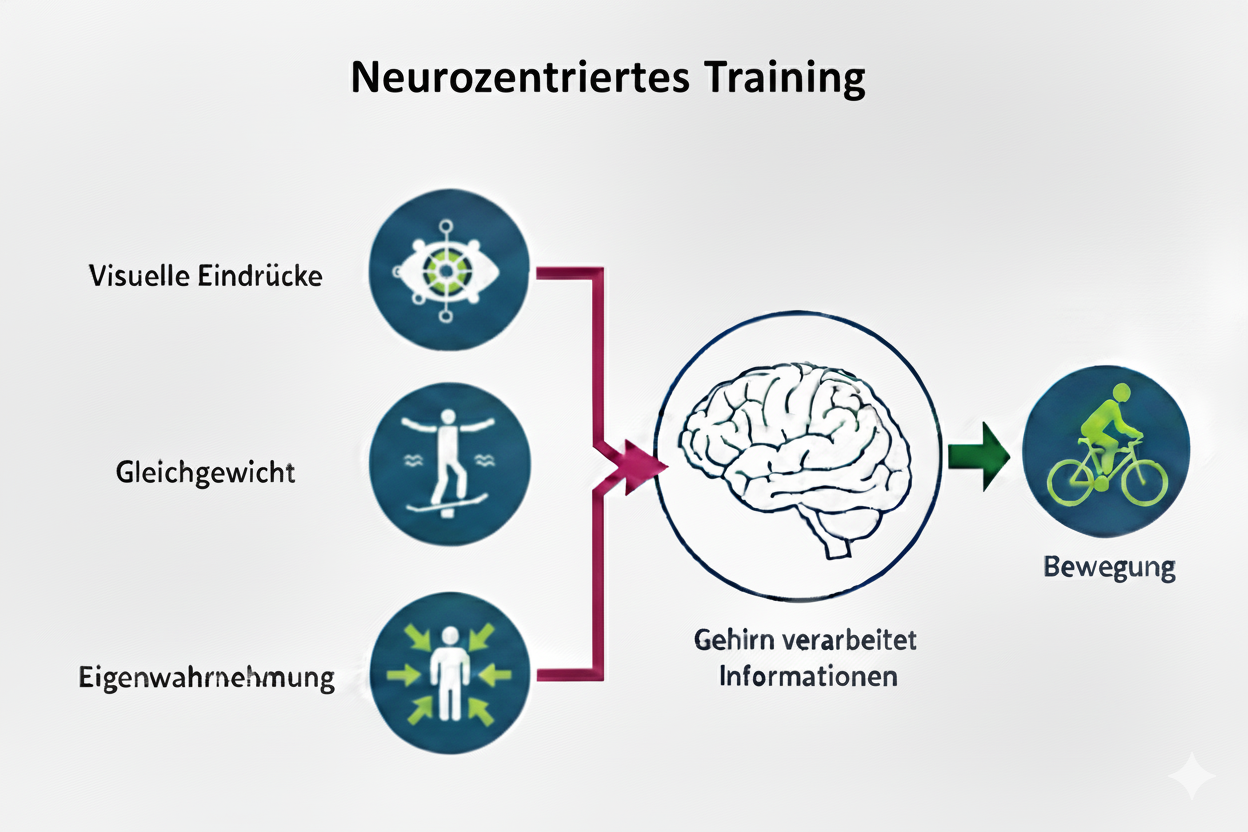
Neuroathletic training offers effective solutions for a wide range of challenges in the musculoskeletal system. NAT opens up new avenues, particularly for chronic and unclear complaints where traditional therapies do not bring lasting improvement. It helps to recognize the often hidden causes, which are not directly in the painful area, but in a disturbed information intake from the eyes, the balance system or body perception (proprioceptive system). 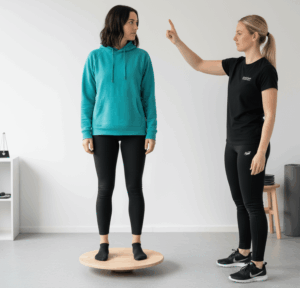
Neurocentred training is also particularly valuable after injuries, as it not only restores the physical structure, but also the neuronal „software“ - i.e. the representation of the injured body part in the brain. This prevents unfavorable compensation patterns and supports full recovery.
NAT is also a proven method for balance and dizziness problems, as it specifically trains the vestibular system. Last but not least, it helps to improve general performance by making everyday movements such as climbing stairs, lifting or walking safer and more efficient.
Why is neuroathletic training an important basis for the success of your therapy?
Every movement is based on precise control by the brain. This complex control system integrates three central movement systems: the visual system (eyes), the vestibular system (balance) and the proprioceptive system (body perception). These systems form the foundation of every safe and efficient movement.
If the neuronal control is disturbed, the brain lacks a clear „map“ or control over certain muscles or areas of the body. This leads to inefficient use, protective tension or restricted movement. These so-called „blind spots“ mean that muscles cannot develop their full potential, even though they are physically intact.
This is exactly where neuro-centered training comes in: It improves neuronal connections and gives the brain back security through targeted, precise sensory input. This releases the „handbrake“ that the brain often applies due to protective mechanisms. In this way, you create the optimal basis for sustainably improving strength, mobility and coordination and for achieving long-term success. Progress in your therapy to achieve.
How does neuroathletic training treatment work?
We begin with a comprehensive analysis of your movement sequences and neuronal control. Specific tests are carried out to identify deficits in the visual, vestibular and proprioceptive systems. We then draw up an individual therapy plan tailored to your needs and goals.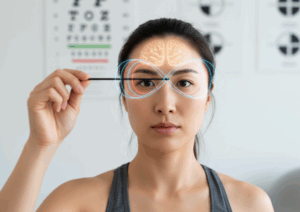
The therapy includes various exercises and techniques that specifically stimulate the brain and improve neuronal control. These include, for example, eye exercises, balance training, sensory integration and functional movement exercises. These are continuously adapted and further developed in order to achieve optimal progress.
Your active participation is crucial. Neuroathletic training promotes personal responsibility and motivation by teaching you how to improve your own movement control through targeted exercises. In this way, you support your health and freedom of movement in the long term.
Self-help: Simple neuroathletic exercises for at-home use
-
Eye exercises: Fix a point and only move your head slowly back and forth, without losing your focus.
-
Walking barefoot on different surfaces activates your foot sensory system and therefore your balance system.
-
Conscious, slow breathing through the nose can calm the nervous system and reduce tension.
When should you have a medical or physical therapy consultation?
Neuroathletic training does not replace medical examination. Seek medical or physical therapy assistance if you suddenly experience dizziness, visual disturbances, numbness, or unexplained coordination problems, or if the pain does not subside despite training.
We also combine neurocentric training with our manuel therapy.
For which symptoms is neuroathletic training suitable?
Neuroathletic training can be used to support persistent movement limitations, unclear pain without a structural cause, balance problems, dizziness, or recurring muscle tension – especially when traditional approaches alone do not lead to the desired results.
Conclusion
Neuroathletic training is a pioneering therapeutic approach that takes into account the complex relationships between the brain, nervous system and movement. It offers you the opportunity to treat pain and restricted movement at the root and improve your quality of movement in the long term. Whether for chronic complaints, after injuries or to improve performance - NAT creates the basis for safe, coordinated and pain-free movement.
Would you like to find out more about neuroathletic training or make an appointment? We at Physiotherapie Waidfuss in Zurich will be happy to support you on your way to greater freedom of movement and quality of life. Contact us by telephone on 044 585 99 49 or by e-mail at info@physio-waidfuss.ch. We look forward to advising you personally and working with you to promote your health.

Rib fracture: healing, exercises and physiotherapy
How to recognize a broken collarbone, how long it takes for it to heal, and how physical therapy can restore shoulder and arm fitness…
Read more
Knee joint broken: healing, rehabilitation and physiotherapy
How to recognize a knee fracture, how long the healing process takes and how physiotherapy can help your knee recover…
Read more
Fractured midfoot bone: symptoms, healing and physiotherapy
How to recognize a midfoot fracture, how long the healing process takes, and how physiotherapy affects walking and endurance…
Read more
Wrist broken: healing, rehabilitation and physiotherapy
How long does it take for a broken wrist to heal, what you can do yourself, and how physiotherapy improves mobility and function...
Read more
Ankle fracture: healing, load bearing and physiotherapy
How to heal a broken ankle, when you can resume activities and how physical therapy improves walking, strength and stability…
Read more
Whiplash trauma: symptoms, self-help and physiotherapy
A rotational trauma usually occurs in a rear-end collision: The head is suddenly moved back and then forward…
Read more
Symphysis pain during pregnancy: What really helps?
Symphysis pain during pregnancy affects many women unexpectedly: a stabbing pain in the front of the thigh…
Read more
Tooth Grinding: Causes, Symptoms and How Physiotherapy Helps
Most people only notice teeth grinding when the dentist spots jagged edges or their partner notices it at night…
Read more