
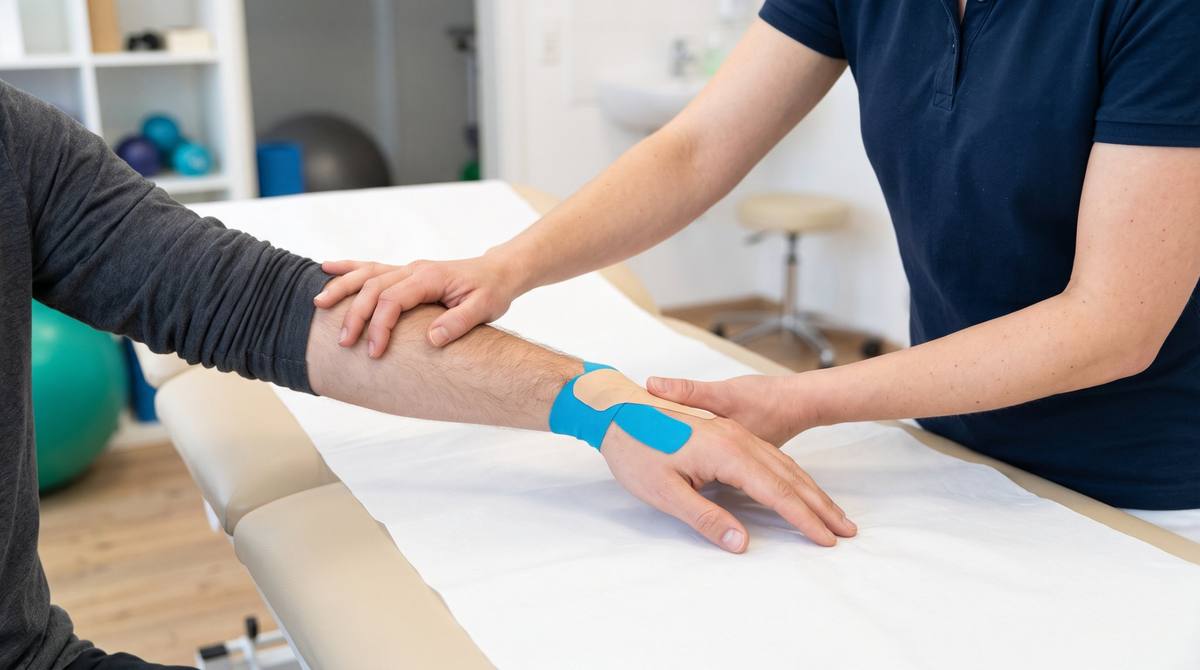
Who wants to see that Wrist broken has, usually fallen over and been caught with the outstretched hand. Especially in winter, when the sidewalks are frozen, wrist fracture is one of the most common bone fractures at all. Most often, the radius is affected just above the wrist. Specialists then speak of a distal radius fracture.
Whether with plaster or surgery: After the immobilization period, the wrist and fingers are often stiff, swollen, and weak. With targeted physiotherapy, you gradually regain mobility and grip strength. In our practice in Zürich-Wipkingen, we accompany you from the plaster phase to full functional ability in everyday life.
Symptoms: How do you recognize a wrist fracture?
After a fall on the hand, these signs indicate a fracture:
- severe pain in the wrist, especially when moving or under pressure
- rapid swelling and often a blood blister
- visible misalignment, such as a step or a kink above the wrist
- They can hardly turn their hand or hold anything anymore
- Numbness or tingling in the fingers
Not every fracture is visible from the outside. Even a seemingly harmless sprain can be a fracture, for example in the ankle bone. Only an X-ray can provide certainty.
When should you see a doctor?
After a fall with pain and swelling in the wrist, you should have a medical examination the same day. An untreated fracture can grow crooked and lead to pain and limited mobility later on.
Also, immediately report to your doctor during the plaster period if:
- the fingers become numb, pale, bluish, or cold
- the plaster is pressing hard or the pain increases significantly
- The hands and fingers are unusually painful after the seizure has subsided; they swell, the skin becomes discolored, or they sweat heavily. This may indicate a rare but serious complication (complex regional pain syndrome, formerly Morbus Sudeck).
How long does the healing process take if the wrist is broken?
A simple, non-displaced fracture is usually treated with plaster or a splint, usually for a few weeks. If the fracture is displaced or unstable, it is often operated on and fixed with a plate. After that, the wrist can often be moved more quickly.
The bone is again capable of being used after about six to eight weeks. However, it often takes several months for mobility and grip strength to return to full strength. How quickly this happens depends on the type of fracture, your age, and your bone quality. For more information on the timing of recovery, read the article. Wound healing phases.
Self-help: What you can do yourself
Even if the wrist is broken, you can still contribute a lot to the healing process:
- Moving fingers: Open and close your fingers several times a day during the plaster time. This keeps the tendons flexible and helps against swelling.
- Hand up: Store the hand especially above the waist in the first few days.
- Don't forget the elbows and shoulders: Move both of them daily; otherwise they will also become stiff.
- After the plaster: Re-use your hand in everyday life, adapted to your pain. Light activities such as washing dishes in warm water promote mobility.
- Avoid falls: Good footwear with a grippy sole helps in winter. Those who fall more often benefit from one. Balance training.
Treatment in Physiotherapy
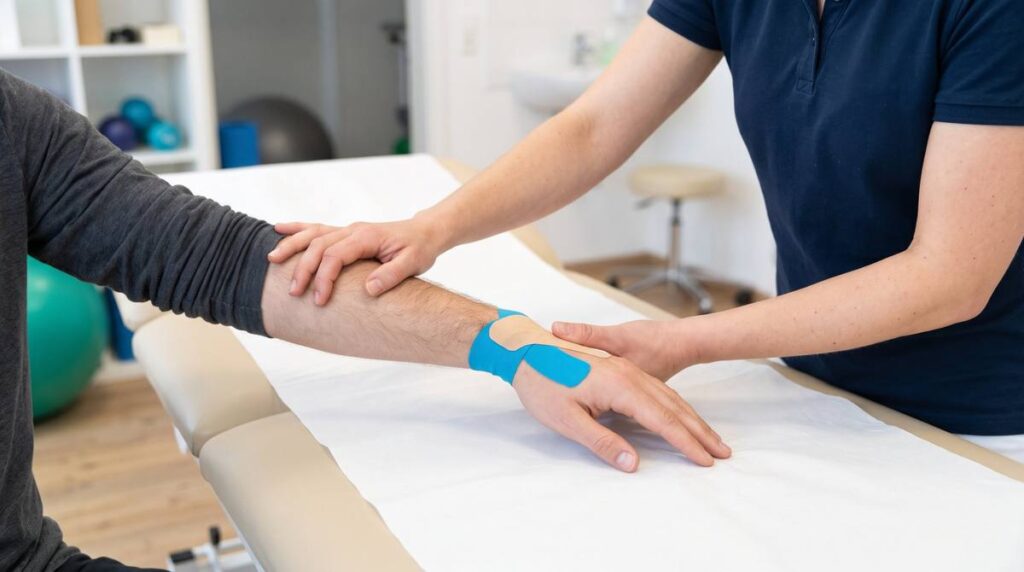
Physiotherapy usually begins as soon as the cast is removed or your doctor allows you to move your hand and fingers after an operation. First, we examine your mobility, swelling, strength, and sensation in your hands and fingers. We then build your therapy plan around these findings:
- Reduce swelling: with manual lymphatic drainage and exercise exercises
- Reclaiming mobility: with manual therapy and targeted mobilization of the wrist, forearm and fingers
- Treating a scar: after an operation, so that it remains soft and flexible
- Building strength: We train grip and support power step by step. With our Power measurement See the progress compared to the healthy side.
- Work and life: We specifically practice the movements you need in everyday life and at work, from typing to lifting.
Further information can be found on our pages. Physiotherapy after surgery and Rehabilitation.
Wrist broken: Who pays for the physiotherapy?
For physiotherapy, you need a medical prescription. A fall is considered an accident. If you are accident-insured through your employer, the accident insurance usually covers the prescribed physiotherapy in full, without a deductible or co-payment. We directly bill the insurance company. If you are not insured through an employer, for example after retirement, the health insurance provider covers the costs. You can find all the details on our page. Physiotherapy after an accident in Zurich.
Frequently asked questions about the broken wrist
When can I drive again after a wrist fracture?
Only when you can hold the steering wheel securely and react quickly in every situation. With plaster, this is usually not the case. Check with your doctor about the timing.
Is it normal for the wrist to be stiff after the cast?
Yes. After a few weeks of rest, stiffness, slight swelling, and loss of strength are normal. With regular exercise and physiotherapy, this usually improves significantly.
When can I resume sports activities?
It depends on the sport. Loads such as lifting weights, throwing or climbing require full strength and mobility. We test with you to see if your wrist is ready.
Make an appointment
Has your wrist been broken and are you looking for physiotherapy near you? We will support you from the plaster phase to full grip strength.
Our practice is located at Hönggerstrasse 118 in Zürich-Wipkingen, directly at the Waidfussweg tram stop (tram 50). Bring your medical prescription to the first appointment and, in the event of an accident, bring the damage number of your insurance company with you. Call us on 044 585 99 49 or Book your appointment online.
