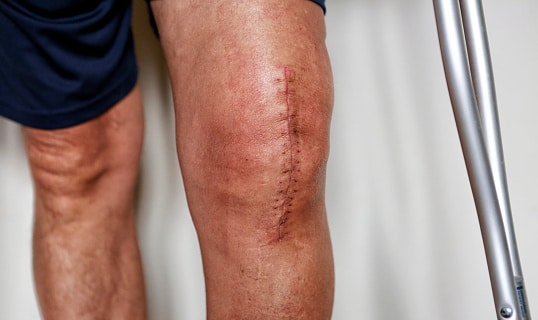


An overview of the phases of wound healing
Typical symptoms of the wound healing phases
- Inflammatory phase: redness, swelling, warmth, restricted movement and pain
- Proliferation phase: decreasing pain, new tissue, noticeable hardening
- Modelling phase: increasing resilience, occasional scar tension
Phase 1: The inflammation phase (3-5 days)
If an injury, such as a Muscle tear or a muscle fiber tear injury occurs, the body starts the inflammatory phase almost immediately. In this phase, the tissue repairs the damage caused by the internal bleeding. Signs of inflammation are redness, swelling, warmth, restricted movement, and pain. These reactions are completely normal and a sign that the body is working on the healing process. Lymphocytes and granulocytes migrate to the injury site and begin clearing away dead tissue and pathogens.
It is particularly important to ensure calm in this phase. Excessive strain and the careless use of anti-inflammatory medications can disrupt the natural inflammatory process and delay healing. Medications, if not used responsibly, can suppress inflammation and thus impair wound healing. Your pain is a signal from the body that should be heeded to promote optimal healing. Edema and tension in the connective tissue may also occur and require special attention.
Phase 2: The proliferation phase (up to 28 days)
After the inflammation phase, the body produces new tissue elements in the proliferation phase, which are necessary for healing. This is crucial for injuries such as muscle tears, torn muscle fibers and muscle strains. Fibroblasts migrate to the injury site and start producing type III collagen, which is later converted into more robust type I collagen.
During this phase, specific stimuli and early functional treatments are crucial. Particularly in the first four weeks, appropriate treatments such as targeted stretching should be continued to ensure adequate fiber alignment. The duration of this phase varies for different tissue types: ligaments require around three weeks, muscles around four weeks, bones up to six weeks and tendons between one and three months for significant healing.
Phase 3: The Remodeling Phase (up to 500 days)
The final phase, the remodeling phase, can take up to 500 days. During this stage, the previously produced collagen is further restructured and aligned to restore the normal function and strength of the tissues. When subjected to functional loading during the proliferation phase, the collagen fibers align correctly along the plane of function. However, if loading stimuli are absent, adequate collagen formation does not occur, and the tissue remains more susceptible to re-injury.
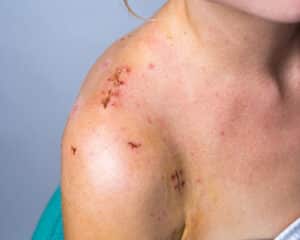
Full tissue resilience can only be expected after the completion of this phase. Premature loading can lead to a prolongation of the inflammatory phase, increased collagen deposition, and ultimately to crystallization and ossification. Stress and hormonal dysregulations such as adrenaline/noradrenaline releases can also impair the healing process.
It is important to respect these phases, especially in the case of muscle tears, muscle fiber tears, muscle strains, or Bursitis to recognize that the healing process often takes longer than that of a bone fracture. Mobility and functionality are promoted not only by the right timing, but also by targeted intervention in every phase of wound healing.
Patience and thoughtfulness are the key to healing
Injuries such as muscle tears, muscle fiber tears, or muscle strains are often associated with a lengthy healing process. While it can be difficult to muster patience, it is essential to support the body through the various phases of wound healing and give it the necessary space for regeneration. Edema, tension in the connective tissue, and other complications are normal, but can be managed efficiently through rest, appropriate therapeutic measures, and a cautious reintegration into physical activities.
Self-help: This is how you can support wound healing yourself
-
Keep the wound clean and follow the dressing change instructions exactly.
-
Feed yourself with a balanced diet rich in protein – the tissue needs building materials for repair.
-
Move adjacent joints within the allowed limits to prevent adhesions.
-
Avoid nicotine, which slows down blood circulation and thus healing.
When should you get it checked by a doctor?
Seek medical attention promptly if there is increasing redness, swelling, or overheating of the wound, if there is fever, if there is foul-smelling or pus-like discharge, or if the wound does not heal after the expected timeframes.
For the post-operative care after operations, we also support you with our Manual lymphatic drainage, To specifically reduce swelling.
We hope that this overview has provided you with more clarity about the healing process after an injury. If you have any further questions or specific concerns, please do not hesitate to contact us at Physiotherapy Waidfuss to contact in Höngg. Your health and recovery are our priority, especially when you have had surgery, our Physical therapy after surgery in Zurich.

Rib fracture: healing, exercises and physiotherapy
How to recognize a broken collarbone, how long it takes for it to heal, and how physical therapy can restore shoulder and arm fitness…
Read more
Knee joint broken: healing, rehabilitation and physiotherapy
How to recognize a knee fracture, how long the healing process takes and how physiotherapy can help your knee recover…
Read more
Fractured midfoot bone: symptoms, healing and physiotherapy
How to recognize a midfoot fracture, how long the healing process takes, and how physiotherapy affects walking and endurance…
Read more
Wrist broken: healing, rehabilitation and physiotherapy
How long does it take for a broken wrist to heal, what you can do yourself, and how physiotherapy improves mobility and function...
Read more