
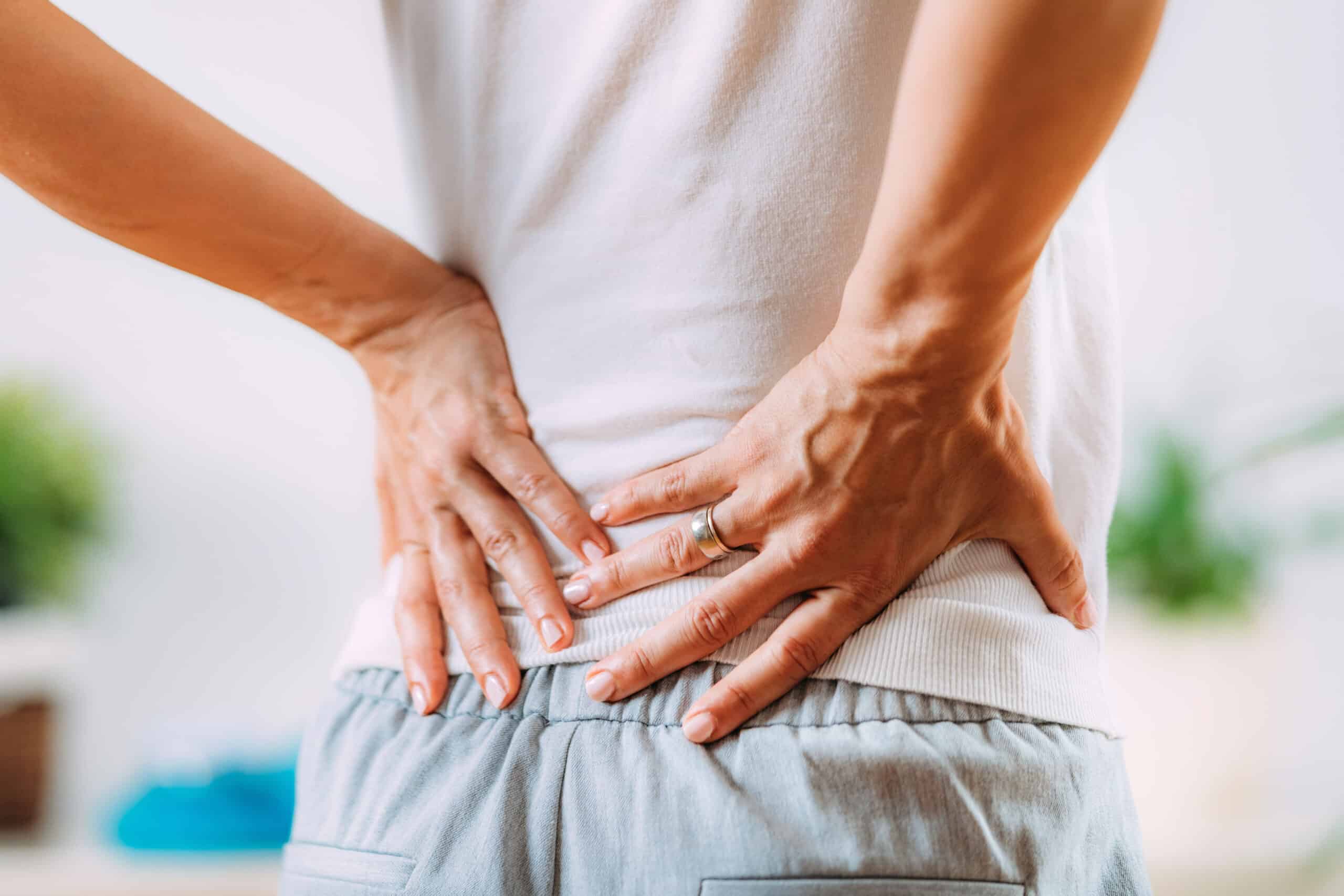
What is an SI joint blockage?
The Myth of the "SI Joint Blockade"
When patients come to us with severe pelvic pain, they often have one goal: they want their Lift ISG blockade let go. The feeling that something has „gotten stuck“ back there is extremely real. But from a biomechanical perspective, the SI joint is secured by incredibly strong ligaments. It only moves by a few millimeters anyway. It cannot dislocate or „lock up“ in the classical sense.
What you feel as a stabbing blockage is in most cases a massive muscular and fascial guarding. If the leg axes are misaligned, you are limping after a foot injury, or the deep abdominal muscles are too weak, an asymmetry arises. The nervous system registers an overload of the joint and switches the muscles around the pelvis (such as the piriformis muscle) into strict tension in order to protect the region.
Our Holistic Treatment Approach
Instead of simply pressing hard on the joint, at Physiotherapie Waidfuss we look at the true cause. We harmonize the muscle tension in the buttocks, check the statics of your feet and knees, and integrate targeted Nerve mobilization. Often it is the fascial tissue or an irritated nerve that fuels the pain. In the case of very stubborn muscular trigger points around the pelvis, we use gentle manual pressure techniques upon request to relax the tissue and restore the SI joint's natural mobility.
Everyday practical tips for a pain-free SI joint

-
The leg length discrepancy: Lie on your back. Bend your knees with your feet flat on the floor. Now let the painful leg fall outward (like a half butterfly) and slowly slide your heel along the floor toward your buttocks and back again. This mobilizes the SI joint completely without pressure.
-
Avoid one-sided strain: When you're standing, consciously distribute your weight across both Feet. The typical "stance leg-free leg" posture at the supermarket checkout line provokes shear forces in the SI joint and feeds the pain memory.
Your pelvic specialists in Zurich Are you plagued by stubborn SI joint syndrome and no longer know how to sit pain-free? The therapists of Physiotherapy Waidfuss in Zurich (Wipkingen and Höngg) bring your pelvis back into balance. Book an appointment today and take the first step towards a pain-free daily life!

The SI Joint Syndrome: Is it the disc or the pelvis?
SI joint syndrome The pain is extremely deep, almost in the buttocks, often radiates unilaterally into the thigh and is...
Read more
Sciatica back pain Zurich – we treat it in Wipkingen
Back spasm and sciatica: When your back suddenly locks Up. A wrong step while getting out of the trampoline,...
Read more
Back Pain in Old Age Zurich | Physio Waidfuss Wipkingen
Back pain in old age: Why it's not "normal aging" "It's just from aging" – we hear this sentence...
Read more
Diagnosis of herniated disc (disc hernia)
Diagnosis of a herniated disc (disc hernia) - Why nerve mobilization often helps better than surgery For many patients...
Read more
Lumbago, back spasm or „just“ back pain? Why your back „shuts down“ and how we solve it
Lumbago, lumbago or „just“ back pain? Back pain is by far the most common reason why...
Read more
Put an end to office back pain in Zurich Wipkingen
Put an end to office back pain Do you know what it's like? A long working day, lots of screen time - your neck gets...
Read more
Stretching program
Your stretching program Stretching is an essential foundation for your mobility and well-being....
Read more
Workplace ergonomics - Do you work at a computer?
Ergonomics at the workplace: Effective measures to combat back pain and neck tension You're probably familiar with...
Read more
Back pain: understanding and solutions
Back pain: can have many causes Back pain is one of the most common complaints that affect people....
Read more
Lumbago - What really helps to relieve the pain
Lumbago - Understanding lower back pain: Important information for you Imagine you are lifting...
Read more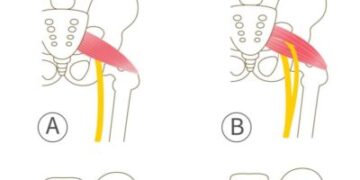
Piriformis syndrome - What helps against pain in the buttocks?
Piriformis syndrome and lumbago at a glance What is piriformis syndrome? Piriformis syndrome is a...
Read more
Back pain - causes, symptoms and treatment options
Back pain - causes, symptoms and treatment options Back pain is a widespread problem.
Read more