
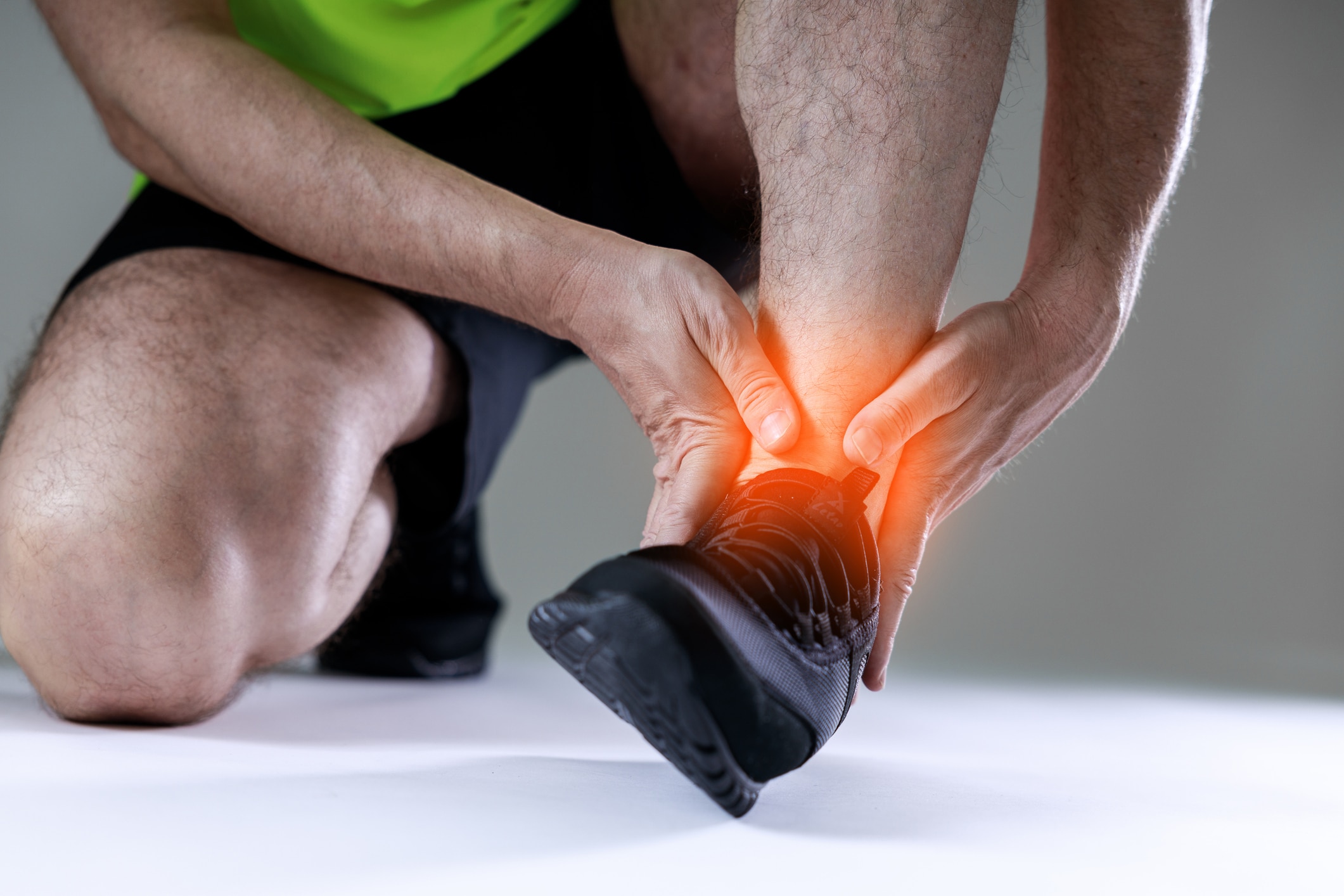


Comprehensive support through physiotherapy
Physiotherapeutic approaches promote the natural healing of the body holistically and effectively:
- Restoration of the joint mechanics: If the foot is sprained, the function of the joints in the foot may be impaired. Unnoticed blockages in the tarsal or lower leg joints can cause long-term complaints that extend to the knee, hip or back.
- Detection and resolution of voltage patterns: A sprained foot often affects the entire body statics. Muscle tension and adaptations of the fascia can extend to the back or pelvis. Physiotherapy treats the myofascial system comprehensively. Techniques such as Trigger point therapy and Dry needling can specifically improve muscle function by relieving tension at sensitive points.
- Promotes lymph flow and tissue healing: Manual techniques improve blood circulation and the Lymphatic drainageThe use of the skin care products is crucial for reducing swelling and supporting tissue healing.
- Prevention of incorrect loading: After a sprain, the body often adapts unconsciously to avoid pain. Physiotherapy helps to recognize such altered gait patterns at an early stage and prevent incorrect loading.
Targeted regeneration and active support
In the acute phase of a sprain, cooling, elevation and immobilization of the affected area are essential. Treatment with physiotherapeutic measures and targeted exercises is crucial for recovery: it ensures that incorrect strain and movement restrictions are recognized and corrected in good time.
Individual support as required:
- Functional exercises: These activate and strengthen the injured areas in a targeted manner.
- Stability and balance exercises: These promote the restoration of joint resilience and create a stable basis for everyday activities.
- Individual guidance for everyday life, work and sport: The aim is to lead an active and pain-free life despite the injury.
Comprehensive physiotherapy treatment is aimed at pain relief and rapid recovery without long-term consequences. It strengthens ligaments and joints, prevents chronic instability and supports long-term recovery if the foot is sprained.
The mechanism of a distortion
A sprain occurs when a joint is strained beyond its normal range of motion, either by twisting or twisting. Bones are temporarily displaced from their normal position without dislocating completely. The joint capsule is overstretched and damaged; in more severe cases, the surrounding ligaments are also affected.
Risk factors for sprains
Lack of or insufficient warm-up, fatigue, lack of concentration and weak muscles are risk factors that significantly increase the likelihood of an accident and the risk of a sprain.
Symptoms and diagnosis of a sprain
Symptoms include severe pain, which increases with movement, and rapidly swelling. The extent of the symptoms depends on the severity of the sprain. Diagnosis begins in the doctor's surgery with an examination of the affected joint and mobility tests. Ultrasound examinations help to detect a torn ligament, while X-rays rule out bone fractures.
Self-help: Treatment based on the PECH principle
Immediate treatment according to the PECH principle is crucial for effective first aid:
- Pause (P): Avoids further strain on the sprained foot.


- Ice (E): Cold compresses or ice packs to reduce swelling.
- Compression (C): A tight bandage stabilizes and helps to reduce swelling.
- Elevate (H): Promotes blood and lymph flow, which reduces swelling.
For more severe sprains, painkillers such as ibuprofen can provide relief, while herbal ointments have a supportive effect. Regardless of the severity, stabilization should be provided by compression bandages or supports.
Return to sporting activities
After a mild sprain, sporting activity should only be resumed once the swelling has gone down and the joint can move again without pain. Severe cases can take several weeks to fully recover before a return to sport is advisable. We will be happy to help you with this. You can book an appointment here.
When should you see a doctor?
Medical advice should be sought immediately in the event of severe pain, pronounced swelling or restricted mobility. An accurate diagnosis and targeted treatment are crucial for successful healing and to prevent future problems, enabling an active lifestyle without restrictions.
If the foot is sprained in an accident and you are accident-insured through your employer, the accident insurance usually covers medically prescribed physiotherapy in full, without a deductible and without a co-payment. More about this on our website. Physiotherapy after an accident.

Rib fracture: healing, exercises and physiotherapy
How to recognize a broken collarbone, how long it takes for it to heal, and how physical therapy can restore shoulder and arm fitness…
Read more
Knee joint broken: healing, rehabilitation and physiotherapy
How to recognize a knee fracture, how long the healing process takes and how physiotherapy can help your knee recover…
Read more
Fractured midfoot bone: symptoms, healing and physiotherapy
How to recognize a midfoot fracture, how long the healing process takes, and how physiotherapy affects walking and endurance…
Read more
Wrist broken: healing, rehabilitation and physiotherapy
How long does it take for a broken wrist to heal, what you can do yourself, and how physiotherapy improves mobility and function...
Read more