
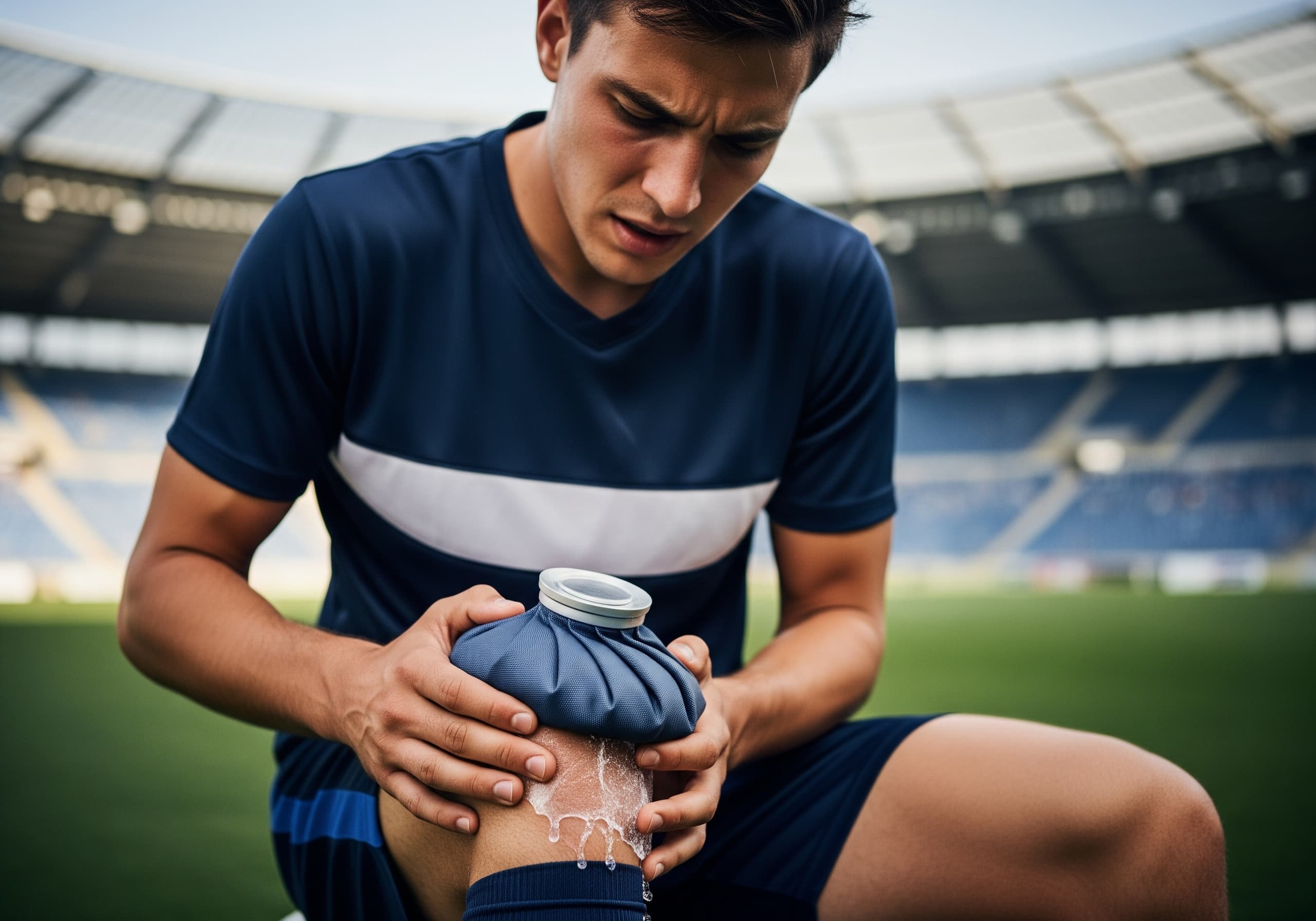
Physiotherapy helps after your accident
Physiotherapy: your key to effective recovery after a sports accident
Physiotherapy plays a central role in the treatment of muscle and tendon injuries resulting from a sports accident. It aims to restore and optimize the mobility and functionality of the affected area through targeted exercises and techniques. Our experienced physiotherapists develop individual treatment plans that are continuously adapted to optimally support the healing process. As a result, athletes return to the playing field faster and stronger.
Proximal tears of the hamstring tendons
The hamstrings, the ischiocrural muscles, run along the back of the thigh and are crucial for extending the thigh and flexing the knee. The biceps femoris, semitendinosus and semimembranosus muscles are frequently affected by sports injuries, especially after a sports accident. Typical injuries range from overuse syndromes to complete tears during fast movements or intense duels.
Causes of injuries:Hamstring injuries are often caused by sudden application of force or overstretching. Situations with maximum muscle tension, such as abrupt braking or acceleration, put the tendons under particular pressure and can be facilitated by sports accidents.
Symptoms (please consult a doctor):
- Swelling and bruising along the back of the thigh
- Sharp, sudden pain in the back of the thigh
- Pain when walking, often accompanied by limping
- Feeling of weakness in the thigh and hip muscles
Diagnostic procedures:The diagnosis is made through clinical examination and magnetic resonance imaging (MRI), which makes it possible to see the extent of the injury and the extent of the tendon retraction.
Degree of injury:
- Grade 1: Mild symptoms with intact tendons
- Grade 2: Moderate partial ruptures
- Grade 3: Complete rupture of all tendon components
What to do in the event of serious injuries?If swelling or hematomas appear without direct impact after a sports accident, a specialist examination is necessary to rule out serious damage.
Treatment options and the importance of the PECH rule
Conservative treatment methods:The conservative treatment of traumatic muscle injuries is supported by the PECH rule supports a quick and effective response in the event of a sports accident:
- Break: After an injury from a sports accident, the affected body part must be immobilized.
- Ice: Effective cooling minimizes swelling and surrounding tissue. Cold packs or ice wrapped in a towel are ideal; cool for 10 minutes, pause, and repeat.
- Compression: A pressure bandage helps to control bleeding and swelling. Bandages must not be too tight.
- Elevate: Swelling is further reduced by elevating the injured limb.
The PECH rule serves as a self-help measure and does not replace the necessary visit to a doctor after a sports injury; the specific forms of treatment performed determine the necessary measures.

- Adjusted load: Gentle partial weight bearing supports healing and minimizes pain. Walking sticks can help in more severe cases.
- Physiotherapy: Professionally guided therapy sessions with gentle stretches and progressive mobilization help restore normal function after a sports injury. Individual treatment plans ensure a customized and efficient recovery.
- Medication: Anti-inflammatory agents or local painkillers (please consult a doctor) can effectively relieve pain. They should always be used in consultation with a doctor.
- Infiltrations: Cortisone injections or autologous blood therapy (PRP) are used for pain relief and regeneration; medical advice is required.
Operational assignments:Surgery is required for tears of at least two tendons with retraction of more than 2 cm. Tendons are surgically fixed via an approach to the ischial tuberosity.
What to do in the event of injuries to the rectus femoris muscle after a sports accident?
In football, thigh injuries, especially of the Rectus femoris muscleoften occur, especially after a sports accident.
Causes of these injuries:Sudden contractions of the quadriceps or falls with hyperextended hip joints lead to injuries, often in the context of sports accidents.
Symptoms (please consult a doctor):
- Swelling and hematomas in the groin area
- Sharp pain when bending at the hips
- Discomfort when lifting the outstretched leg
Diagnosis:These injuries are examined clinically and supplemented by X-rays, and in the case of severe symptoms by an MRI.
Treatment options:Conservative treatment options are usually sufficient:
- Cooling and optimized load: Similar to the hamstring muscles, proven measures should be used.
- Physiotherapy: Specific stretching and strengthening exercises are crucial. Our experts ensure controlled and efficient healing after a sports accident.
- Medication: Anti-inflammatory agents or local preparations are used (please consult a doctor).
- Infiltrations: Supplementary use of cortisone or PRP possible if recommended by a doctor.
Surgical solutions:In cases of insufficient response to conservative measures, tendons are surgically stabilized to correct the consequences of a sports injury.
When should you have a medical or physical therapy consultation?
Seek immediate help if you experience a stabbing pain with audible cracking, a visible hematoma, or a laceration in the muscle when the leg can no longer be used, or if the discomfort does not improve despite rest.
Physiotherapy plays a crucial role in recovery from a sports accident and injuries of any kind, not only supporting physical recovery, but also helping patients regain confidence as they return to full mobility. With Physiotherapy Waidfuss You are in the best hands for competent care after a sports injury. Our experienced team will guide you through your personal recovery program and help you regain your full performance. Arrange an appointment online – trust us with your health; we will get you back into action safely and strengthened!
After an accident? Information on the cost coverage by the Accident Insurance (UVG) and on the course of therapy can be found on our page. Physiotherapy after an accident in Zurich.

Meniscus injury: When the shock absorber in the knee fails
Meniscus injury: When the shock absorber in the knee fails A sudden pulling when turning, a crack in the knee…

Shoulder dislocation: When the shoulder jumps out of the joint
Shoulder dislocation: When the shoulder jumps out of the joint: A fall onto the outstretched arm or onto the shoulder,...
Sharp pain while jogging? How to get the runner's knee (iliotibial band syndrome) under control
The temperatures are rising, the running shoes are laced up, and the first few kilometers along the Limmat are running as if by themselves.…
Stubborn heel pain: heel spur or plantar fasciitis?
For many sufferers, the day begins with a nasty surprise: You get out of bed, strain your foot and…